Why Conservation Planning Is Important
Farmers and ranchers need a roadmap to implement the unique conservation efforts that will benefit their land. A comprehensive conservation plan is the first step to managing a landowner’s natural resources.
When a landowner reaches out, a conservation planner will meet with them to discuss goals, operations, and concerns. The planner will conduct a complete inventory and evaluation before recommending practical solutions to improve the productivity and long-term sustainability of the land.
Every piece of land is different and requires customized solutions to manage the unique natural resources found there. Conservation planners work with landowners and operators to create step-by-step recommendations that connect an owner’s sustainability goals to their business goals. Collaborating with farmers and ranchers to develop and implement a conservation plan ensures their land’s ability to provide for families and communities far into the future.
Who Needs Conservation Planning?
We all need conservation planning! While landowners, operators, and producers who manage privately-owned lands should have a conservation plan to ensure operational sustainability; cities, districts, states, and even entire countries benefit from conservation planning. Anyone interested in protecting natural resources could see results from working with a conservation planner.
Key Benefits of Conservation Planning for Sustainable Operations
Business owners often see the benefits of effective conservation planning within a short timeframe. A strong conservation plan can:
Improve the quality of your plants, water, soil, livestock, and wildlife habitat
Ensure you comply with environmental regulations
Boost your bottom line
Adapt to the changing needs of your business
Conservation Planning Resources
The National Conservation Planning Partnership (NCPP) is your go-to destination for conservation planning resources. Whether you want to get certified as a conservation planner, or read the latest news and trends, our resource library has materials designed to support you in your work.
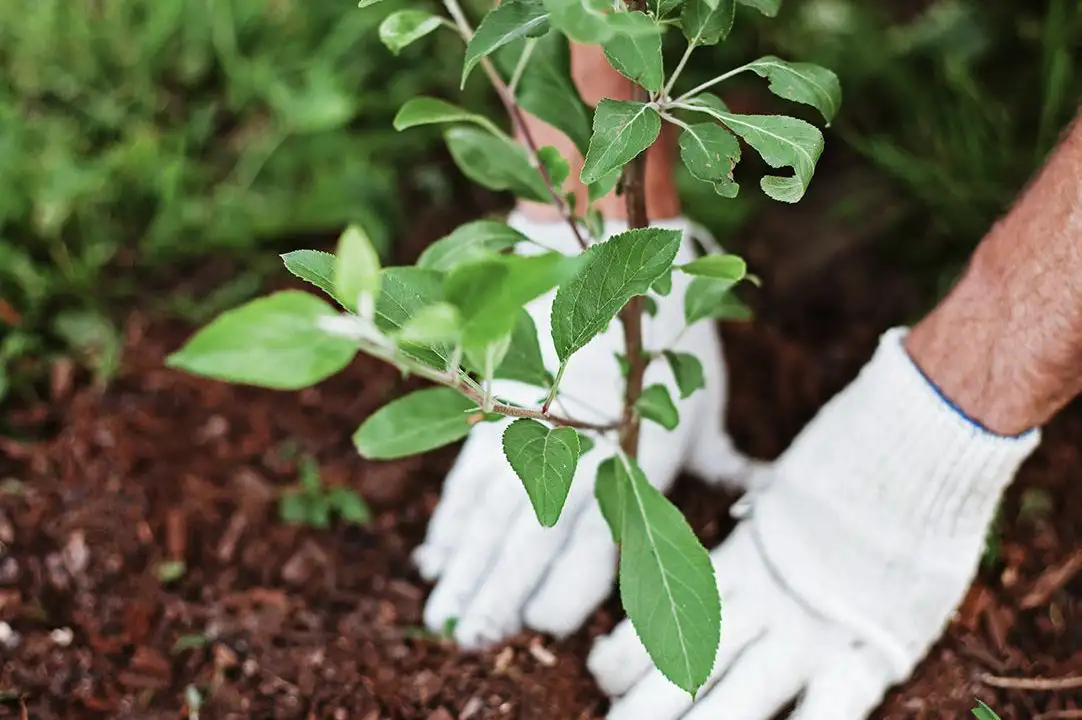
10 Habits for Effective Conservation Planners
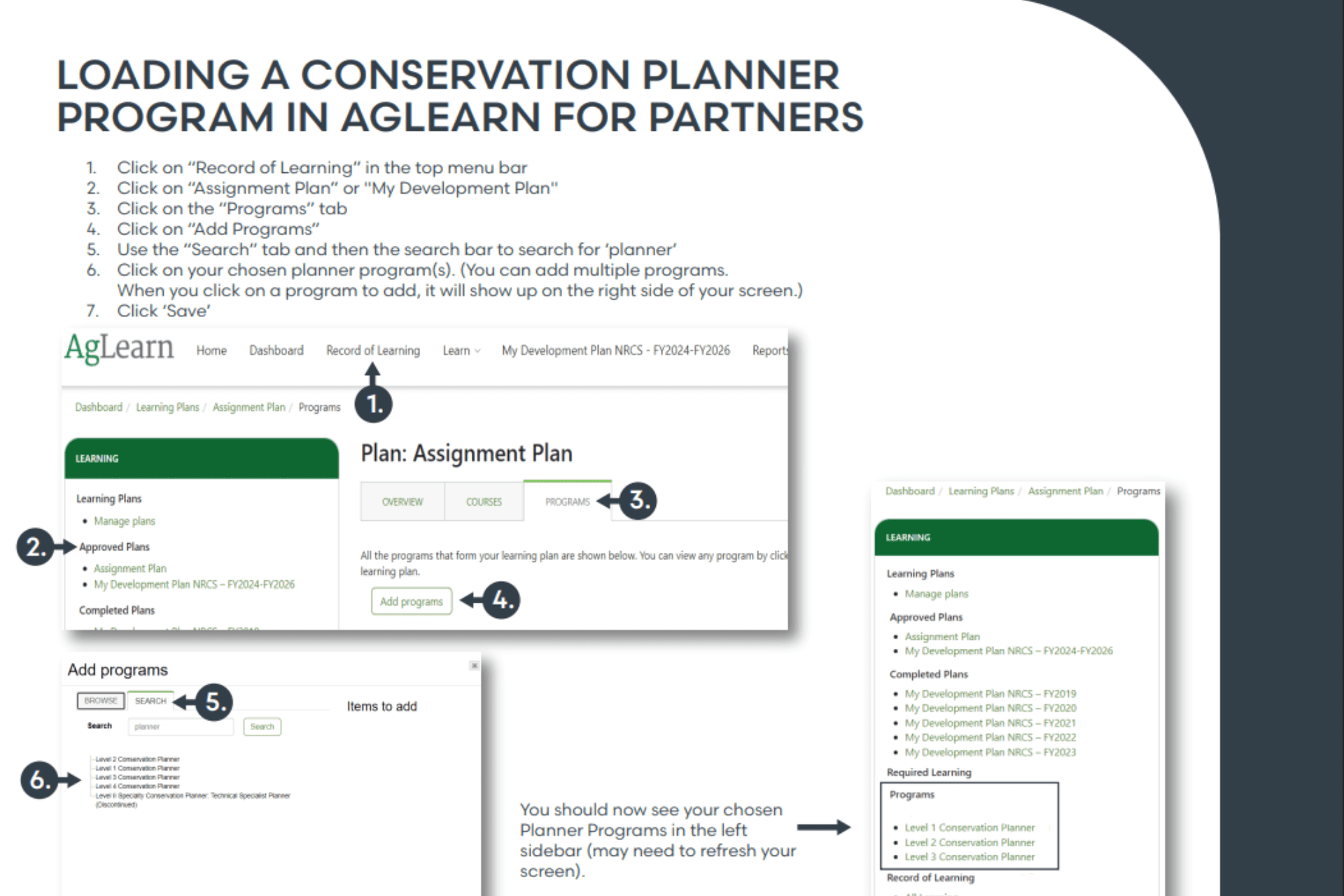
How to Load a Conservation Planner Program in AgLearn [For Partners]
Local Working Group Guide
Where to Get Help
Conservation Planning FAQs
What is conservation planning?
Conservation planning is a method of working with landowners and operators to integrate the management of the natural resources on their land with the business objectives that guide their operations. A conservation plan offers recommendations to manage and protect a property’s unique natural resources while also ensuring sustained or increased productivity.
What is included in a conservation plan?
A conservation plan includes tools, resources, and recommendations customized to a specific property. It may include an inventory, photos, soil information, and maps, along with science-based recommendations to better manage the land’s natural resources. A landowner will use the plan to select solutions to implement.
Who creates conservation plans?
Conservation planners create these plans. A conservation planner is someone who has been trained in the skills required to provide conservation planning assistance. A conservation planner may be certified or non-certified, but both roles require training in core competencies and skills to meet all national minimum requirements for conservation planners.
How do conservation planners work with landowners?
Conservation planners collaborate closely with landowners through site visits, data collection, and joint decision-making. They provide technical expertise and help translate conservation science into practical, achievable strategies that the landowner can opt to implement. These strategies are designed to both preserve natural resources and sustain or grow the landowner’s business goals.
Where can I find conservation planning tools and resources?
NCPP offers a robust resource library on the All Resources page. Additionally, our Online Learning platform offers a variety of courses designed to support both new and experienced conservation planners in their daily work.
Is there funding or technical assistance available for conservation plans?
While NCPP does not directly provide funding, many NRCS programs and local conservation districts offer technical and financial assistance. Your conservation planner can guide you to the right resources for your land and goals.
Are conservation plans simply designed to facilitate the contracting of program funding?
No. Conservation plans are written to address resource concerns. While the planning process can make it easier to identify when you may qualify for programs, such as the Farm Bill or other federal and state programs, this is not the intent of the planning process.