2025 Award Winners
2025 Conservation Producer Recipient:
Their Story
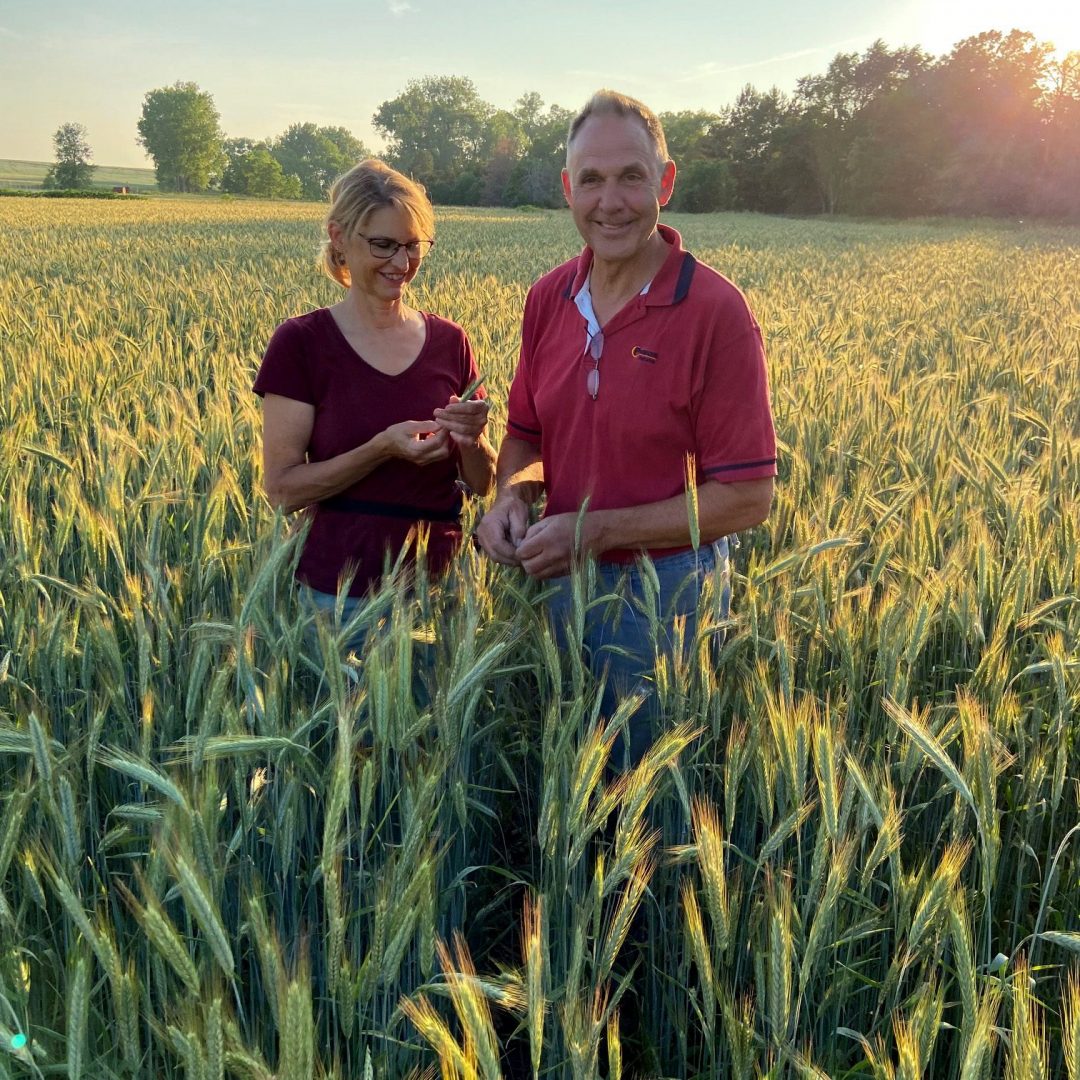
Jeff and Jolene Steffen have been named the national winners of the Conservation Producer 2025 Hugh Hammond Bennett Awards for Conservation Excellence for outstanding conservation efforts on their farm in Crofton, Nebraska.
Jeff and Jolene Steffen of Crofton, Nebraska have spent over 40 years building a conservation-focused farming system that exemplifies innovation, leadership, and stewardship of natural resources. Operating a 600-acre farm in a region dominated by corn and soybean production, they have fully adopted continuous no-till practices, diverse crop rotations, multi-species cover crops, and livestock integration—aligning the soil health principles. Their conservation plan, initiated in the early 1990’s, has been continuously revised over the years based on their insightful observations in each field, information from university extension and conservation practitioners, research farms, agronomists, and other peer farmers.
The Steffens’ extended crop rotation includes corn, oats, soybeans, buckwheat, cereal rye, and peas. Early in their journey, they incorporated cover crops and increased crop diversity to build organic matter and improve soil health. Today, their system integrates livestock grazing, which offsets cover crop costs and enhances soil structure, nutrient cycling, and biological activity. They maintain living roots year-round through overwintering and multispecies cover crops, maximizing biomass production and supporting microbial life.
Their backyard is flanked by the Bow Creek, a cherished family landmark. Their management practices improve water infiltration, reduce erosion, and enhance water quality. Active in the local Bow Creek Watershed project, they mentor other farmers in the area and collaborate with the University and various partners on conservation trials to showcase how conservation has measurable impacts. These innovative trials have included cover crop experimentation, on-farm compost production, compost extract applications, and biological soil testing. As part of a USDA Conservation Innovation Grant, they also beta-tested the FARMS Program Soil Evaluation Tool and the Comprehensive Soil Health Management Plan, providing valuable feedback to improve these resources for broader producer use.
Guided by a minimalist philosophy—“doing more with less”—the Steffens prioritize soil health and farm efficiency. They adapt practices annually based on field observations, soil response, and ‘Return on Investment’ data. Their system has achieved measurable outcomes: reduced nitrogen input, decreased herbicide use, and elimination of insecticides since 2011. One of the most powerful parts of their soil health message is their economic analysis – which they openly share and has been incorporated into a University agriculture economic calculator. Their data-driven approach helps bridge the gap between innovation and adoption, making the case that soil health systems are both practical and profitable.
The Steffens are generous with their time, volunteering in ways that further displays their commitment to natural resources. Jeff serves on the local Lewis and Clark Natural Resources District Board and is an appointee to the Nebraska Natural Resources Committee. He also serves on a local bank board, bringing a conservation minded perspective to agricultural finance. They have shared their conservation message at numerous national, state, and local events. Their knowledge has been taken into classrooms – from introducing elementary students to the hidden world of soil microorganisms, to providing hands-on learning for University students, their dedication to sharing the conservation message helps to shape the next generation of agricultural stewards. Additional contributions to their community and church are numerous. Jolene is also a locally renowned artist, her work focuses on beauty found in day-to-day rural life, agriculture, and Midwest landscapes.
The Steffens’ success demonstrates that conservation can be practical, profitable, and scalable. Their data-driven approach bridges innovation and adoption, inspiring farmers, students, and policymakers. Their legacy lies not only in healthier soils but in the countless individuals they’ve influenced through education, mentorship, and leadership.
2024 Regional Producer Winners:
Northern Plains (ND) – Lewis and Sherry Heaton
Southwest (UT) – Braden McMurdie
North Central (IL) – Allen DeCrane
Northeast (NY) – Shaun and Linda Gillilland
Southeast (SC) – Kirsten Robertson
2025 Conservation Planner Recipient:
His Story
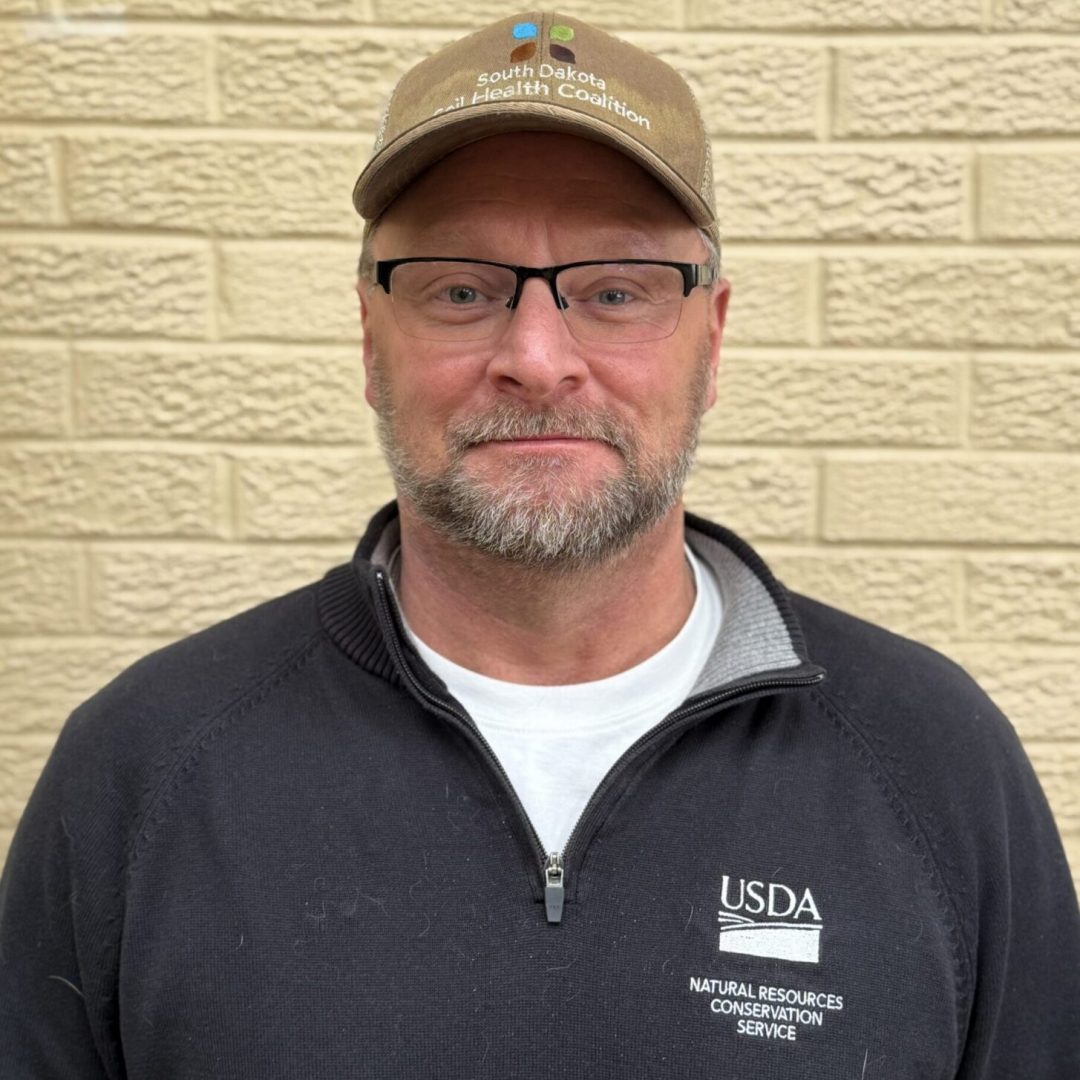
Shane Jordan, Resource Conservationist for the USDA Natural Resources Conservation Service in Clark, South Dakota, has been named the national winner of the Conservation Planner 2025 Hugh Hammond Bennett Award for Conservation Excellence for his outstanding conservation efforts.
Shane’s passion for natural resources began on his family’s 2,500-acre corn and soybean farm in the Loess Hills of West-Central Iowa. Growing up, he managed a 25-head flock of sheep, worked with a 50-head cow herd, and helped operate a 20-acre tree farm selling Christmas trees and live spaded conifer trees. Shane’s grandparents cultivated a five-acre garden where they grew potatoes for the family and raised approximately 50 dual-purpose breeds of chickens. Hours spent hiking, camping, and harvesting native berries in the Loess Hills shaped his deep commitment to conservation.
After earning a Bachelor of Science degree in Range Management from South Dakota State University, Shane gained diverse experience as a Riparian Coordinator with USDA/AmeriCorps and worked for the McKenzie County Grazing Association /U.S. Forest Service in Watford City, ND conducting woody draw assessments on the Little Missouri National Grasslands. Shane also served as the Lake Byron/Ravine Lake Watershed Coordinator where he implemented CMP with private landowners throughout the watershed area. In 1996, he joined NRCS as a Range Conservationist in Faulkton, South Dakota.
Shane served as District Conservationist in the Redfield NRCS Field Office for 23 years, with the last eight years covering both Spink and Clark Counties. When he arrived in Redfield, participation in USDA/NRCS programs was minimal. By building strong relationships with growers and the Spink County Conservation District, Shane transformed conservation engagement in the county. His focus on technically sound conservation planning led to explosive growth in program participation in CRP, WHIP, EQIP, WRP, and CSP eventually leading to the management of over 250 Conservation Stewardship Program (CSP) contracts, their cornerstone program.
In 2015, after meeting soil health pioneer Gabe Brown, Shane launched the Soil Health Summer Bus Tour in partnership with the Spink County Conservation District. The tour connected area producers with experienced farmers implementing the five core soil health principles. The initiative evolved into winter sessions featuring nationally known soil health experts including Gabe Brown, Jason Mauch, Dr. Jon Lundgren, Ray Archuleta, and others.
In 2020, Shane accepted a position as Resource Conservationist on the Brookings Area Ecology Team, specializing in soil health, saline/sodic soils, conservation planning, and urban agriculture. He created a monthly newsletter called “The Journey to a Soil Health System,” providing technical information on ecological processes, soils health principals , and regenerative agriculture across cropland, grasslands, and urban spaces.
Shane’s greatest achievement has been changing producer mindsets through education and relationship-building. His work exemplifies NRCS’s foundation of offering technically sound conservation planning that identifies resource concerns and creates lasting change on the land.
2024 Regional Planner Winners:
Northern Plains (ND) – Darrin Olin
South Central (TX) – Brandon Bing
North Central (IN) – Kevin Chastain
Southeast (GA) – Kevin Lee
2024 Award Winners
2024 Conservation Producer Recipient:
Their Story
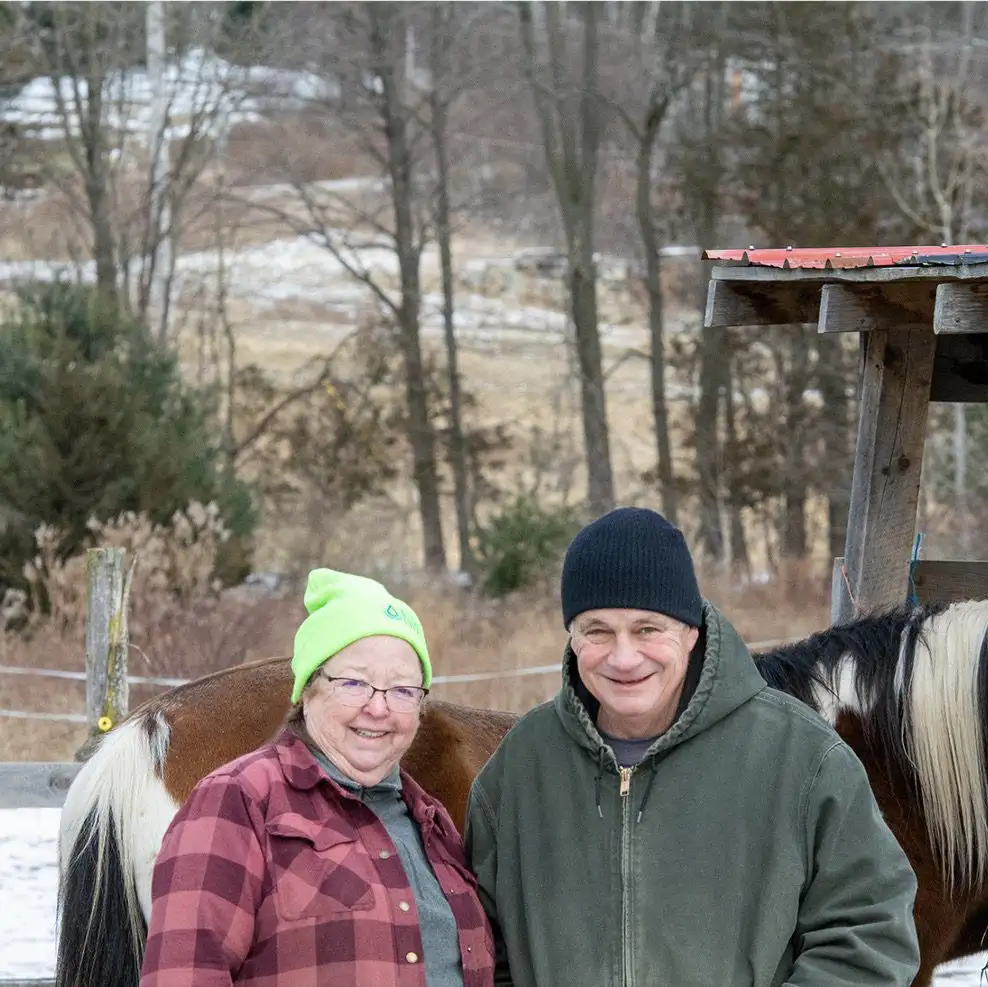
Shaun and Linda Gillilland have been named the national winners of the Conservation Producer 2024 Hugh Hammond Bennett Awards for Conservation Excellence for outstanding conservation efforts on their farm, The Ben Weaver Farm, in Willsboro, New York.
“NRCS is proud to work with Shaun and Linda in their efforts to protect and conserve the land. The Gillilland’s hard work and dedication to conservation will allow their farming operation to be successful for generations to come,” stated Blake Glover, New York NRCS State Conservationist.
Shaun dedicated 25 years to serving in the United States Navy, living in various locations across the country. In 2005, they made the decision for Shaun to retire from the military and set down roots. Shaun and Linda chose New York, where they acquired a farm from their friend and mentor, Ben Weaver. Shaun expressed gratitude for Ben’s guidance, “We learned everything that we possibly could from Ben, and he slowly began to step back.”
Eager to explore different agricultural practices, the Gillillands soon recognized a major limitation. “Time is the most valuable asset on any farm, especially when you work full time and provide for the farm,” remarked Shaun. Together they envisioned transforming their farm into a distinct regenerative operation. Acknowledging the importance of time management, the couple began connecting with various organizations including the Soil and Water District of Essex County and the Natural Resources Conservation Services (NRCS), New York.
The Ben Weaver Farm encompasses 495 acres along the steep Bouquet River in New York. Featuring approximately 70 acres of tillable land, 115 acres of grazing land, 90 acres of hay land, and 220 acres of woodland. The Bouquet River is a vital habitat for a variety of plant and animal species, including endangered mussels and landlocked Atlantic salmon.
The Gillillands have collaborated with the U.S. Fish and Wildlife Service (USFWS) and New York State Department of Environmental Conservation (DEC) to monitor salmon populations in their river section. With the goal of preserving and restoring local species. Additionally, Shaun and Linda have allowed public fishing access on their portion of the river. The collaboration with various agencies has not only enhanced their farming operation but also contributed positively to the surrounding environment. Recently, Shaun and Linda have designated 294 acres of their farm to a permanent easement with the Adirondack Land Trust and additional support of The Nature Conservancy.
Their main operation is grassfed beef, where they use prescribed grazing. Although this is Shaun and Linda’s main operation, they also graze a flock of hair sheep for meat. The farmhouses an equestrian operation, operated by their daughter Chauntel. Chauntel’s equestrian business (CSG Horsemanship) offers public riding lessons, training, and provides a special way for kids to connect with animals and the land. The Ben Weaver Farm is always accepting tours and visits from the public, and they encourage it!
The Gillilland’s work with NRCS includes two Conservation Stewardship Program (CSP) contracts, one for grazing management, the other forest management. These programs encourage participants to address priority resource concerns, improve, and conserve the quality and condition of natural resources in a comprehensive manner. Through CSP, NRCS provided financial and technical assistance to the Gillillands to enhance, protect, and improve their soil, water, energy, and related natural resources through conservation.
NRCS Soil Conservationist Allie Holmes, who worked extensively with the couple notes, “The story of Shaun and Linda Gillilland holds immense significance in our North Country community. Their unwavering commitment to both the community and the conservation of our natural resources is truly remarkable. Shaun and Linda are always willing to try something new. They embody the image of what it means to be good stewards of the land. I feel incredibly lucky to be a part their journey.”
When asked, “What is biggest challenge you faced on your farming journey?” Shaun and Linda paused and said “COVID was one of biggest challenges in the economics of the farm.” During that time, it was impossible for them to get a slaughter date until a year out. Linda’s response was different, “I think that when you do something well, there’s going to be other people who are going to want to do that same thing. The sense of competition is tough. We are all working for the same audience locally, the same population, so we are constantly having to innovate.” This embodies Shaun and Linda’s dedication and determination to adapt and be open to new ideas and find ways to enhance their farm.
Receiving this award means a lot to Shaun and Linda both; Shaun remarked “I think it’s a testament that, you know, nobody is an island. It takes a village to build everything up. This means so much to our family and to our community as well.”
NRCS District Conservationist Tricia LaValley from the Plattsburgh Field Office expressed the joy of working with Shaun and Linda, “They represent the ideal producer every conservation planner aspires to collaborate with. Their approach is infused with positivity, extensive experience, and a genuine passion for their mission and vision. Their journey is remarkably inspiring and aligns seamlessly with the objectives of our agency. Together, they embody enthusiasm, determination, and resilience, dedicating their heart and soul to their farm. Shaun and Linda have faced numerous challenges, yet these obstacles have only fueled their drive to succeed. These are just a few of the reasons this family is more than deserving of this coveted award.
They recognized the importance of adaptability and embraced innovative ideas and practices to improve their farm, which they have successfully implemented. Collaborating with Shaun and Linda is always invigorating, as they continuously seek out new methods and knowledge to explore. They have emerged as role models in the North Country, inspiring countless farmers to persevere and maintain hope in the face of adversity. Their farm and their narrative will resonate for years to come, and I feel honored to know and work alongside Shaun and Linda. They have demonstrated to farmers that success is attainable, and that the effort is worthwhile.”
2024 Regional Producer Winners:
Northern Plains (ND) – Lewis and Sherry Heaton
Southwest (UT) – Braden McMurdie
North Central (IL) – Allen DeCrane
Northeast (NY) – Shaun and Linda Gillilland
Southeast (SC) – Kirsten Robertson
2024 Conservation Planner Recipient:
His Story
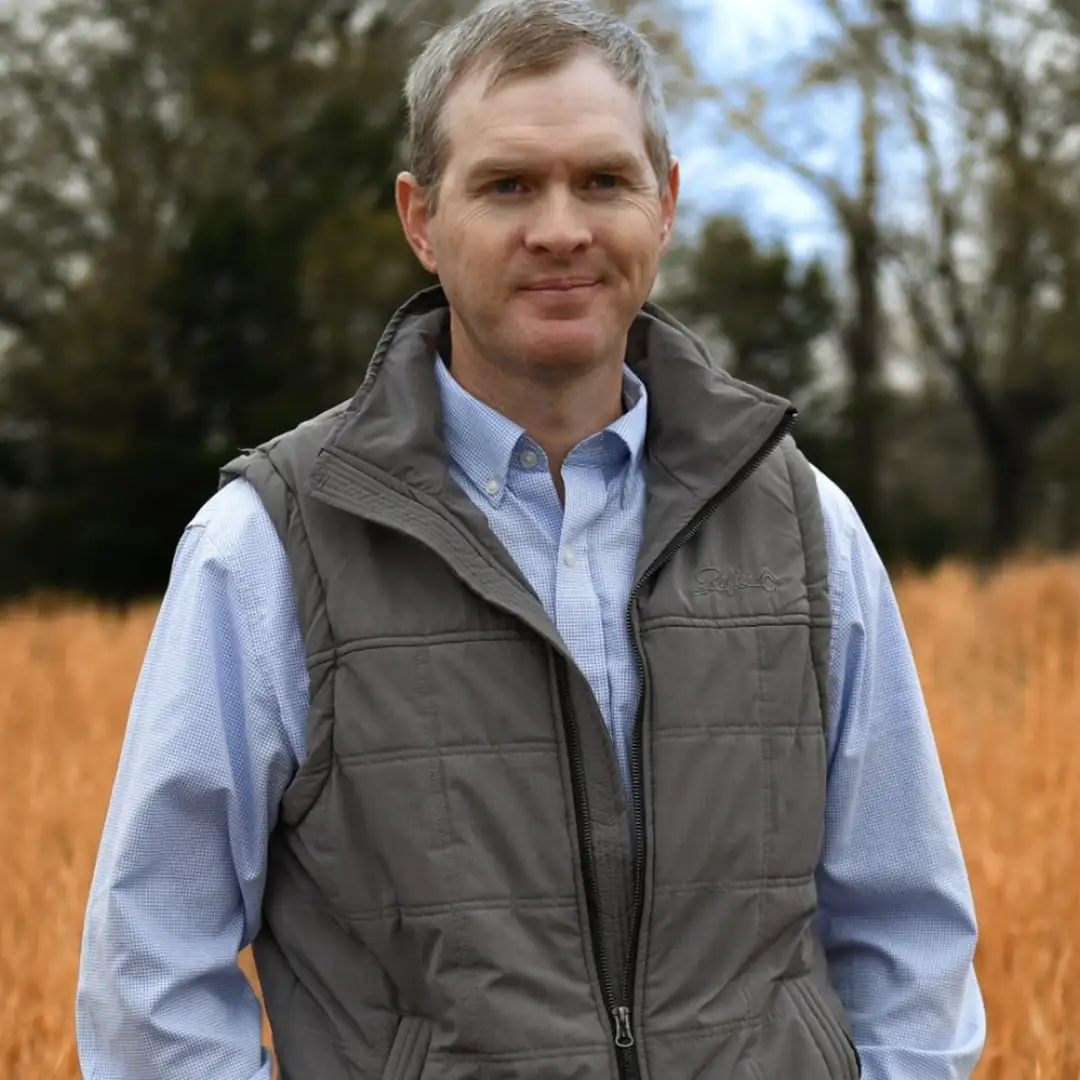
Brandon Bing, Grazing Land Specialist for the USDA Natural Resources Conservation Service in Palestine, Texas has been named the national winner of the Conservation Planner 2024 Hugh Hammond Bennett Award for Conservation Excellence for his outstanding conservation efforts.
Brandon’s passion for agriculture began as a child. Brandon grew up on a cattle operation in Leon County, Texas, where he not only worked on the ranch, but also participated in groups like 4-H and Texas FFA showing steers and heifers. Knowing he wanted a career in agriculture, he went on to attend Texas A&M University and graduated with a bachelor’s degree in animal science in 2008.
Originally planning to work in real estate development, Brandon had a change of plans when the economy went into recession. Looking for work, he reached out to an old friend from 4-H, Truman Lamb, who worked for Texas AgriLife Extension in Palestine, Texas. Brandon went to meet him and he immediately walked Brandon to the local NRCS office knowing they had a vacant position. Within a few weeks, Brandon was hired to serve as the Soil Conservation Technician for Anderson and Freestone Counties, a position he served in until 2018 when he was promoted to the Grazing Land Specialist providing service to 21 counties in northeast Texas.
Kristy Oates, NRCS Texas State Conservationist says, “Brandon is a conservation leader in East Texas. He is highly respected by his peers, co-workers, leadership, partners, and producers. NRCS Texas is proud to have an employee like Brandon.”
In 2016, as a soil conservation technician, Brandon was instrumental in beginning a small grassroots group that provided opportunities for landowners to meet and learn from each other and conservation professionals. The very first meeting included two landowners, but quickly grew exponentially as word spread and still meets today. The group meets once per month at various locations to have discussions about management strategies or go on pasture walks, to see various management strategies utilized on various landscapes. Brandon facilitated the group in a way that encouraged discussion and collaboration among managers with widely varying management strategies, from high density intensive grazers to traditional rest rotation operators.
Kelsey Cavener-Sumner, District Conservationist in Palestine, Texas, says, “Brandon is an outstanding mentor, trainer and planner. His knowledge of the area and the resources coupled with his relationships with private landowners have provided excellent training opportunities for employees, partners and area landowners to gain technical skills when it comes to conservation planning.”
Brandon’s favorite part of his job are the individual people, the relationships that have been forged with the agricultural producers while helping them achieve the goals for their operation. He has made friendships with many of them that will last not only throughout his career, but throughout his life. His proudest accomplishment is watching a producer realize the full potential of themselves integrated with their land. He is thankful to be a part of that journey and that is what is the most rewarding and fulfilling to him.
Kelsey Cavener-Sumner, District Conservationist in Palestine, Texas, says, “Brandon is an outstanding mentor, trainer and planner. His knowledge of the area and the resources coupled with his relationships with private landowners have provided excellent training opportunities for employees, partners and area landowners to gain technical skills when it comes to conservation planning.”
In forging those relationships, a network of like-minded people who share a passion for the land and for conservation has been built. The passion is contagious, and the group grows as one producer sees another producer succeed. He is truly moved when a producer he has worked with is recognized for their efforts and even more people get to see their story and begin to think that they can do something similar on their land too.
Charles Kneuper, NRCS Texas State Resource Conservationist, says, “Brandon personifies Hugh Hammond Bennett in everything he does. He spends time on the land with the producer putting into common terms the resource needs that he’s identified. He is knowledgeable, friendly, a good listener, has a strong work ethic, and a willingness to help everyone achieve their conservation goals. I am always amazed at how well Brandon can connect with Texas farmers, ranchers, forest land stewards and partners. I aspire to be more like Brandon.”
Brandon also enjoys training new employees. He specifically like the one-on-one opportunities to work with new employees and not only teach them technical skills, but more importantly tries to be a mentor to them for their personal and professional life and ways to find balance between the two. He also tries to pass on his skills and talent for being an effective communicator with the customer and how to build relationships that will last a lifetime.
John Stone, NRCS District Conservationist in Quitman, Texas, says “I have worked with Brandon for years, and it has always been a pleasure. He is very knowledgeable about grazing lands, grazing livestock, and plant identification. His method of passing technical information on to the landowners and other NRCS employees is unmatched. He is passionate about the land, the resources and helping others achieve their goals, whether they are new to agriculture, new to the job or seasoned professionals.”
Brandon is an exceptional communicator who has a gift for words and is able to articulate the benefits of integrating livestock on various landscapes, from the tall grass prairie to longleaf pine forests, mesmerizing his audience and garnering support for conservation across East Texas.
“Brandon is an effective communicator and leader for conservation,” says Frank Baca, NRCS Wildlife Biologist. “His practical knowledge of land management and NRCS conservation practices gives him the ability to meet the landowner where they are and work closely with them to help them achieve their conservation goals.”
2024 Regional Planner Winners:
Northern Plains (ND) – Darrin Olin
South Central (TX) – Brandon Bing
North Central (IN) – Kevin Chastain
Southeast (GA) – Kevin Lee
2023 Award Winners
2023 Conservation Producer Recipient:
Their Story
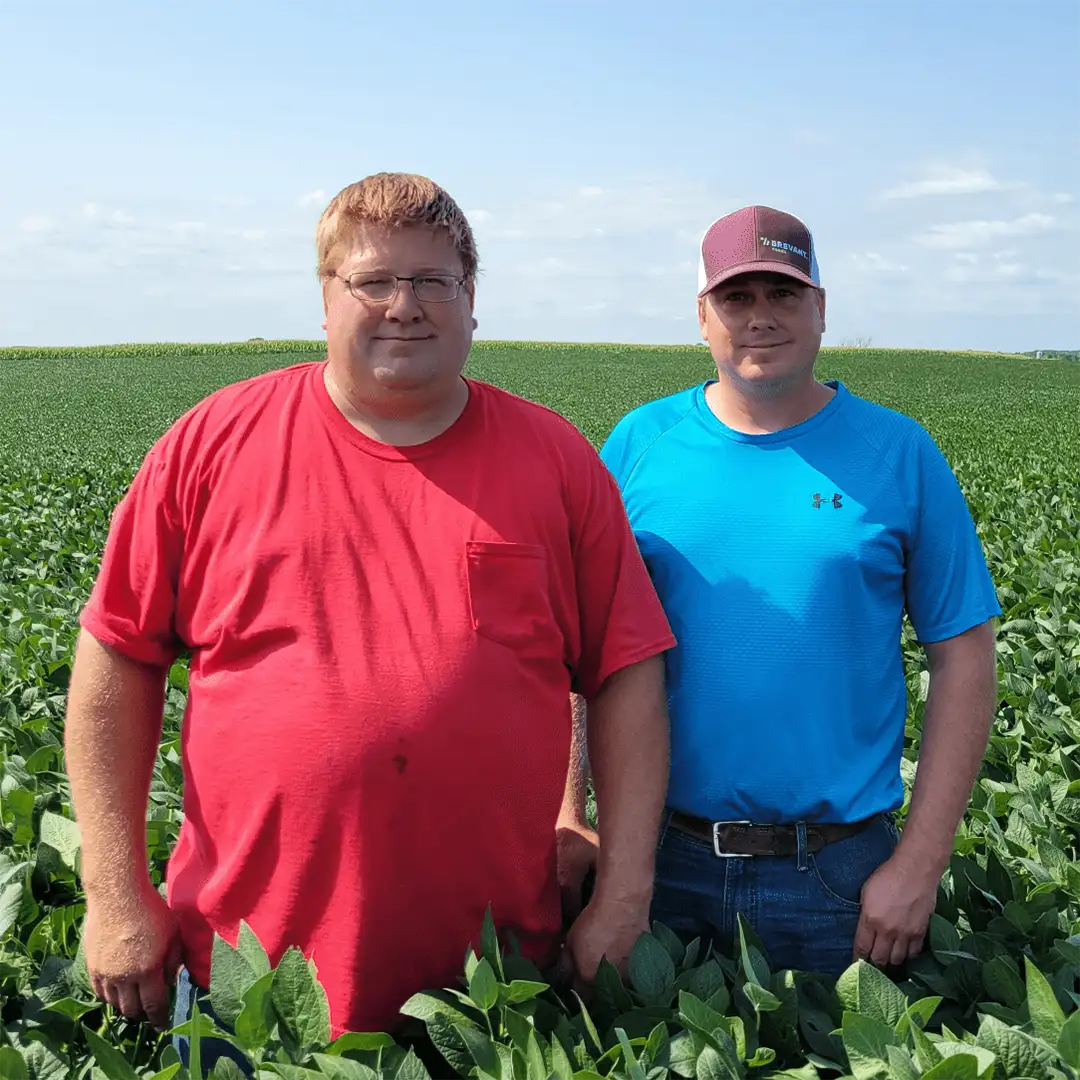
Ryan and Michael Hough have been named the national winners of the Conservation Producer 2023 Hugh Hammond Bennett Awards for Conservation Excellence for outstanding conservation efforts on their farm, Hough Brothers, Barnesville, Minnesota.
Troy Daniel, NRCS MN State Conservationist, says, “Ryan and Michael Hough are innovative producers who have been willing to step outside their comfort zone to improve resources and enhance their farming operation. Minnesota NRCS has been honored to work with them as they continue to be leaders in conservation.”
The Hough Brothers farm 1800 acres of row crops and run a 600 head cattle operation in the triangle of Clay, Otter Tail and Wilkin counties. This location graces them with the flat valley clay loam soil, gumbo clay soil and the rolling hills with clay tops. In 2008 they started renting some land of their own. In 2014 they took over the operation from their parents. They soon realized they wanted to make some changes. After hearing success stories from fellow no-till operators, Ryan and Michael Hough wanted to give it a try on their farm. They started with a 90ac. field in 2015. However, in 2016 they switched to a full farm no-till operation. Not only did they see labor savings from not having to incorporate fall tillage, but they also saw the benefit of saving soil moisture and controlling erosion. The brother said, “Switching the farm over to a no-till operation really suited us. Getting rid of the fall tillage wasn’t easy. We didn’t have a lot of support from neighbors because it wasn’t something that you see done in our area.”
Fast forward five years, the Hough Brothers look back and wouldn’t have changed a thing. They started integrating cover crops into the no-till operation to get the benefit of grazing the cover crop after the cash crop was harvested. The brothers said, “Utilizing cover crops as a feed source helps save on our winter feed bill.” This allows the brothers to extend the grazing period beyond the fall frost. They have also switched from conventional grazing to rotational grazing their pastures. The brothers said, “In 2017 we decided to try full season cover crops and added rotational grazing. We started with weekly moves for the herd to get the most use out of our pastures. The next year we switched it up to 3 day moves, and currently move every 3-7 days, depending on our workload.” They will tell you that it is a little more labor intense to have to set up the wires and get them moved daily but worth your time in the long run. They no longer split the herds up according to pasture size. They run the herd as one group through the intense grazing management plan.
Bob Guetter, Conservation Team Lead for Becker, Clay, Ottertail, Wilkin Counties, says, “The brothers are innovative producers willing to try things on their ground and share the ups and downs of their trials and experiences form over the years to help others grow and learn. You know which fields are theirs as you drive by, they are alive. There is wildlife, livestock, abundant microbes, and organisms on and in the soil, all working in a symbiotic relationship.”
The Hough Brothers have utilized the EQIP and CSP programs, along with grazing RIM, and are Ag Water Certified through the MN Dept. of Ag. Ryan has taken his turn serving as Chair on the MN Barley Council, National Barley Growers board member, and has been the speaker at numerous agricultural conferences. In 2019, with the help of NRCS, MN Soil Health Coalition and Anheuser-Busch, they teamed up with a neighbor and hosted a grazing cover crops workshop.
When asked “What was the biggest challenge?”, Ryan laughed and said, “My brother, but all joking set a side, it would be getting past the mindset of not caring what everyone else thinks. It’s not easy but you need to drown out their opinions” He would go on to tell you that they didn’t have a lot of support from neighbors who were not familiar with no-till practices, but they see the response from the soil and yields and didn’t let it detour them. Ryan said he would encourage anyone interested to find a network of people that are practicing no-till and talk to the people willing to share advice.
Jonathan Quast, NRCS District Conservationist, Wahpeton, ND Field Office, says, “Ryan & Michael are producers every conservation planner would thoroughly enjoy working with because of their commitment to conservation and reflect NRCS’s mission and vision. Their goals and conservation are not mutually exclusive but intertwined and are having positive and compounding benefits for themselves and the land. Friendly, hardworking, inquisitive, and forward looking are apt descriptions of Ryan and Michael. Planning with them is always fun, unique, and interesting because I’m never sure what the next idea would be thrown my way. Hugh Hammond Bennett would be proud of what they have done in being leaders and being a voice for conservation and that each one of us have the ability to shape our world for us and those to come.”
2023 Regional Producer Winners:
Pacific (HI) – Jenny Webster
Northern Plains (ND) – Keith, Sandy, Karl, and Becca Bartholomay
Southwest (UT) – Terry Spackman
South Central (TX) – Carroll Collier
North Central (MN) – Ryan and Michael Hough – National Winners
Northeast (NJ) – Lindsay Napolitano and Johann Rinkens
Southeast (GA) – Caroline Lewallen
2023 Conservation Planner Recipient:
His Story
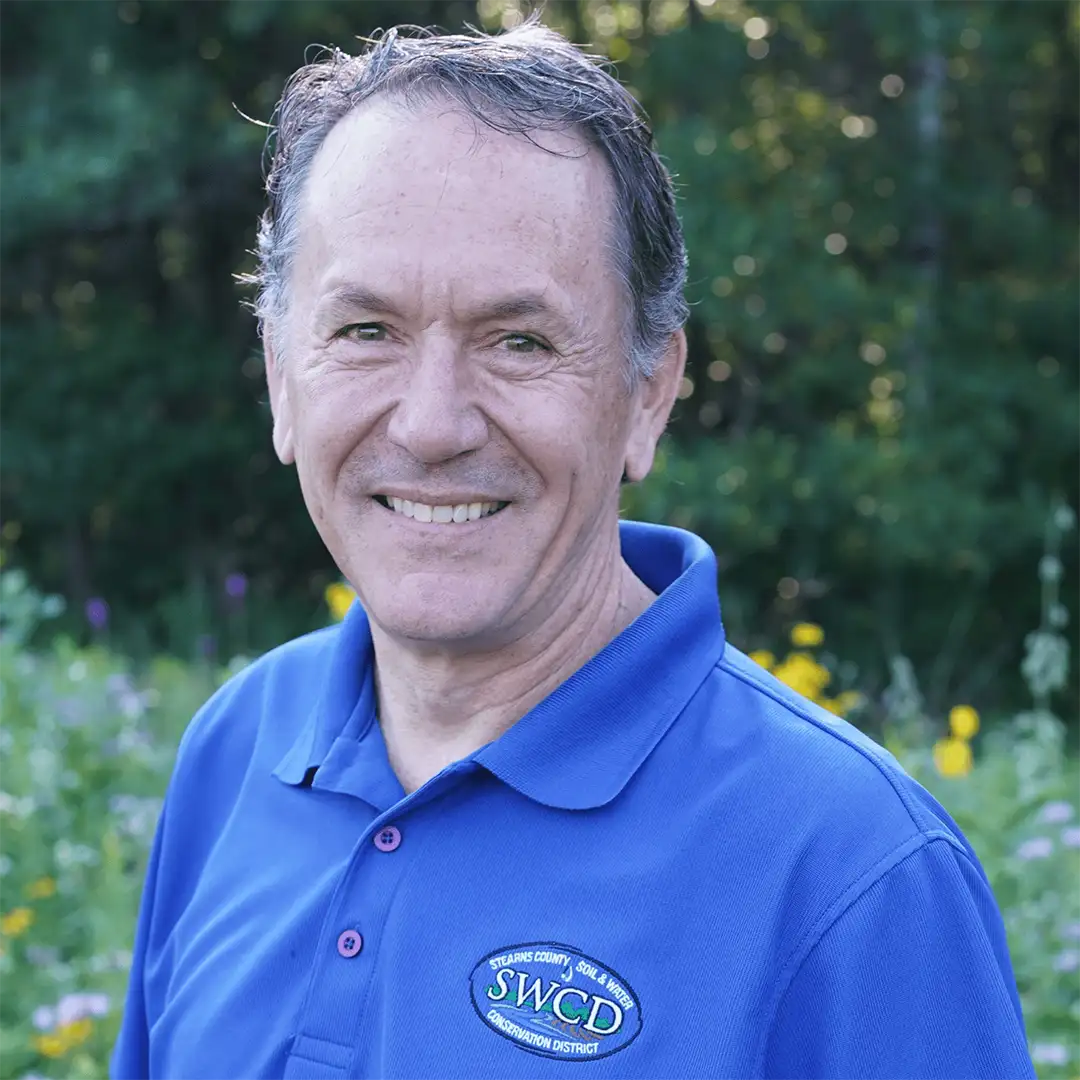
Mark Lefebvre, a Conservation Planning Team Manager at Stearns County Soil and Water Conservation District in Waite Park, Minnesota has been named the national winner of the Conservation Planner 2023 Hugh Hammond Bennett Award for Conservation Excellence for his outstanding conservation efforts.
Troy Daniell, NRCS MN State Conservationist says, “Mark Lefebvre is a leader in his community and in conservation. He is highly respected by his coworkers, partners, and the producers. Minnesota NRCS is honored to call Mark a partner in conservation.”
Mark attended the University of Wisconsin – River Falls and then the University of Minnesota where he received a bachelor’s degree in agronomy. After college, Mark was a partner in a 1300-acre, 100-cow dairy and crop farm. As crop manager, he was responsible for the production and harvest of all crops, which included corn, alfalfa, small grains, and soybeans, some of which was under irrigation. The farm hosted numerous demonstrations and field days for various ag-related organizations. Mark also served as an elected Wright Soil and Water Conservation District Supervisor for 14 years.
After selling the farm, Mark worked in the ag retail industry selling seed, fertilizer, and agronomy services before moving to the Stearns County Soil and Water Conservation District as a nutrient management specialist. Mark has engaged with and worked alongside diverse groups of farmers, ranchers, forest landowners, state and local government officials, non-profit organizations, and businesses. His farm experience and professional training has led him to be recognized as a go-to leader locally as well as across the state. He has provided outstanding conservation planning and technical assistance services to hundreds of agricultural producers in Minnesota over his 18-year career. Now overseeing a team of four conservation planners, he is a sought-after mentor to his peers and partners in addition to being a trustworthy advisor in the agricultural community.
Michael Hemmann, Civil Engineer Technician, NRCS Mcleod County says, “I have had the privilege to work with Mark for approximately 15 years. He exemplifies what a soil conservationist is and should be. He is a great role model and teacher for younger employees with the SWCD and NRCS. He is also a great communicator with farmers. I believe his best quality is that he is a good listener. The farmer will talk about his operation and Mark will provide realistic alternatives to them. He knows those conservation practices because when he was farming, he implemented those conservation practices on his land. He has been a true asset to the SWCD, NRCS, and the agricultural community.”
Mark works with agricultural producers and private landowners to develop comprehensive plans to address natural resource concerns affecting soil and water quality and quantity. He provides direct technical assistance for nonstructural land management practices as well as nutrient management, irrigation water management, and other practices. He also works with landowners and producers to become certified through the Minnesota Ag Water Quality Certification Program.
Dennis Fuchs, Administrator, Stearns Soil and Water Conservation District, says, “Mark has been a great addition to the Stearns County conservation team, benefiting landowners across the county. His farming experience, education and willingness to learn has made him a fantastic conservation planner. And most recently has taken on the role of the Conservation Planning Team Manager. Mark leads by example and is highly respected by his team, farmers and partners.”
Mark’s background on the farm and extensive professional training have allowed him to be an effective communicator and develop relationships with producers and peer conservationists alike through his advocacy of one-on-one, whole-farm conservation planning. As a result of his efforts, conservation practices have been implemented on thousands of acres of farmland across Stearns County as he works to protect water resources and improve soil health.
Tessa Greve, Conservation Planner, Stearns County Soil and Water Conservation District, says, “Mark is a terrific leader and conservation planner. He has a great relationship with producers and encourages his colleagues to do the same! Mark has worn a lot of hats throughout his career and adapts to new challenges and programs with ease. He is a joy to work with every day!”
As a Certified Crop Adviser, Mark has an excellent reputation throughout the agricultural industry in Minnesota with crop consultants, retailers, local co-operatives, and University of Minnesota and Extension staff. In addition, he takes time to attend partner events to explain and promote conservation technical assistance and is an expert member of some Farmer-Led Council groups.
Kelly Molitor, Conservation Planner, Stearns County SWCD, says, “Mark is an outstanding employee at the Stearns SWCD. With his background in having been a full-time dairy farmer, schooling in agronomy, and 20+ years of conservation planning, he is a valuable resource to not only his Team, but also the countless producers he assists on a daily basis. Mark understands that not everything is black and white when working with landowners on conservation practices. He uses common sense, logic, conservation ethic, and proved science to help successfully implement conservation on the ground in Stearns County. He is someone I look up to as a trusted mentor and go to for guidance, but also consider a friend. I can’t think of anyone more knowledgeable, hard-working, or down to earth in this field than Mark Lefebvre.”
One of Mark’s proudest accomplishments, he said, was while farming with his dad and brother in the mid-1990s when he converted their cropping system to no-till and strip till. This allowed Mark to provide firsthand advise to farmers implementing similar soil health practices when he started working at the SWCD. A more recent accomplishment Mark noted involved a soil health field day equipment demonstration that he helped organize and run. He later discovered that three farmers purchased strip till equipment because of the field day.
Logan Berg, Soil Conservationist, NRCS Sherburne County says, “If you were to think of the best qualities of a Conservationist, you would think that the qualities they would need are as follows: knowledgeable, friendly, connected, easy going, good listener, strong worth ethic, and most importantly willingness to stand up and be a leader to those that need it most. This is what Mark is to so many across this state if not the country. Mark has always been there for our farmers and ranchers who may be struggling, and to those who have not seen him in action he has this amazing ability to connect with our producers so easily. He can immediately recognize their concerns and guide them in a way to just take one step in the right direction even though the final answer may be a mystery at that moment. I have always been amazed at how well Mark can connect not only with our farmers and ranchers but to our partnering agencies in this huge machine we call conservation. What I have found to the why Mark is able to connect so well is because he has this unique perspective of growing up in the same world that so many of these farmers and ranchers did. A world that is a small rural town, that nobody has ever heard of. Seeing the same resource concerns that he himself had to deal with growing up on farm. With that knowledge and unique perspective Mark can excel with giving our Producers the tools they need to continue growing food for people around the world. With all these traits Mark has proven time and time again that he embodies the best qualities of conservationist, and I am very fortunate to learn from him and more importantly I am fortunate to call him a friend.”
2023 Regional Planner Winners:
Pacific (AK) – Phil Kaspari
Northern Plains (KS) – Doug Spencer
Southwest (CO) – Jerry Archuleta
South Central (AR) – Sherri DeGraphenreed
North Central (MN) – Mark Lefebvre – National Winner
Northeast (PA) – Melissa Erdman
Southeast (GA) – Jeff Kastle
2022 Award Winners
2022 Conservation Producer Recipient:
His Story
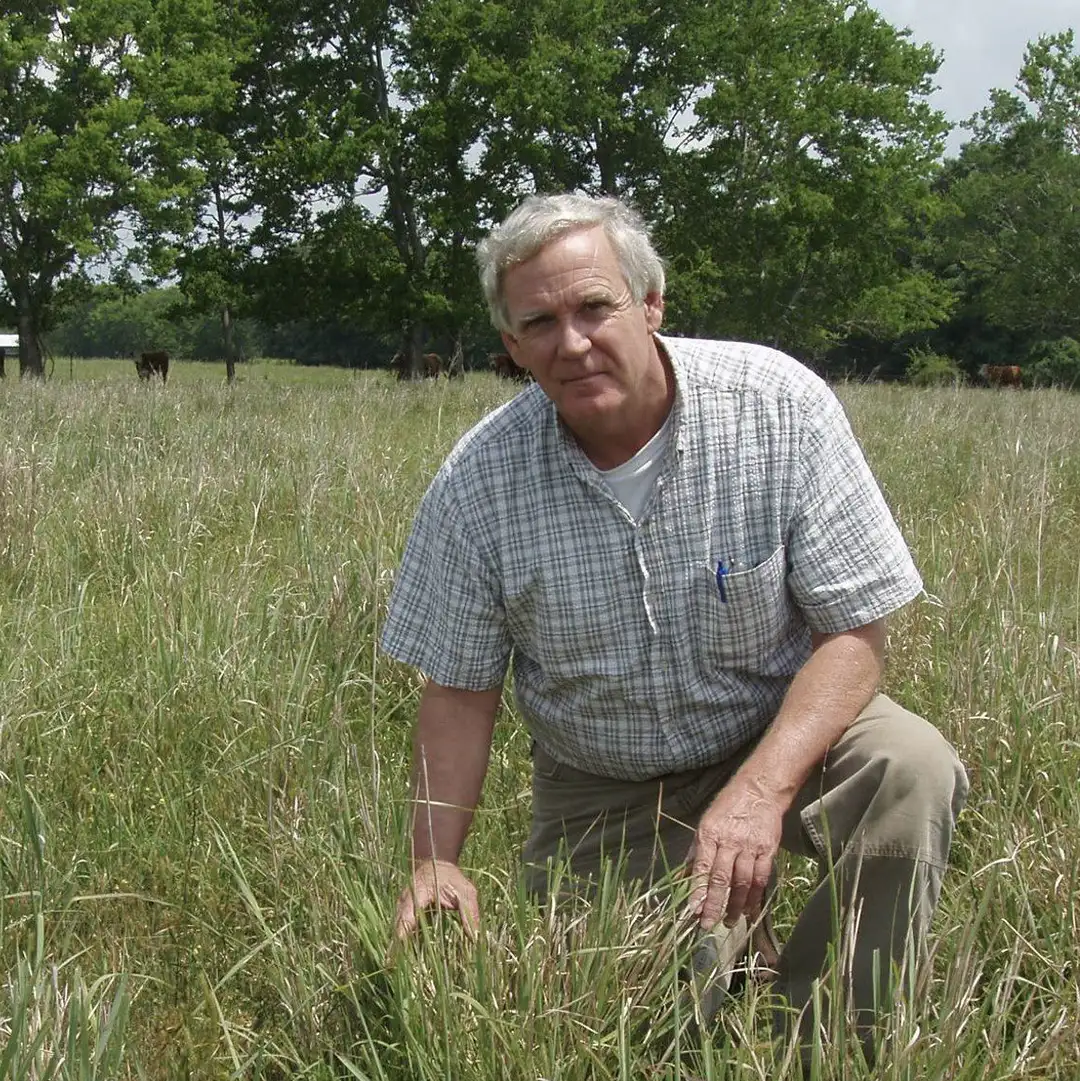
Charles Holmes has been named the national winner of the Conservation Producer 2022 Hugh Hammond Bennett Award for Conservation Excellence for outstanding conservation efforts on his farm, Holmestead Company in Marion, Alabama. Charles and his wife, Jenny, now with their three sons (William, Webb, and Cooper), have managed the farm since 1972.
The Holmestead Company is the successor of the original farm that was founded in 1819 by Holmes’ great-great grandfather William Moore from Newberry, South Carolina. Holmes’ grandchildren are the 7th generation to work on the farm. The family farm and its historical and agricultural buildings are open as a teaching property and include 53 structures on the National Register of Historic Places. The farm is one of the oldest continuous working family farms in Alabama and is certified as both a Century & Heritage Farm by the Alabama /Department of Agriculture and Industries. The farm has been managed based on Hugh Bennett’s belief that using the land according to its capability and treating the land according to its needs is the wisest form of stewardship.
The farm has changed through time from cropland, dairy, cattle, and forestry to mostly forestry and a new endeavor of agritourism. The first conservation plan was written in 1939 and has been updated several times as new conservation technology and information became available.
Ben Malone, NRCS AL State Conservationist, says, “Mr. Holmes has a commitment to conservation planning and implementation of conservation practices that is exhibited by the many recognitions he has received.” His farm’s designations as a Treasure Forest, Tree Farm, and Stewardship Forest are indicative of his planning and implementation of forestry practices.
Holmes and his family were named the recipient of the prestigious Helene Mosley Memorial Treasure Forest Award for outstanding achievement in multiple use management of forest land by the Alabama Natural Resources Council and The W. Kelly Mosley Environmental Awards Program. One of Holmes’ greatest honors was being recognized by the Alabama Wildlife Federation (AWF) Governor’s Award as Alabama’s Conservationist of the Year. Claude Jenkins, AWF Wildlife Biologist, says “Mr. Holmes commitment to incorporate wildlife habitat considerations into his forest and farm management plans serves as a model for conservation while maintaining an efficient forest and farm operation.”
Holmes received the Environmental Stewardship Award for the Southeast presented by the National Cattlemen’s Beef Association, an acknowledgement of his conservation ethic related to his cattle operation. Because of his attention to detail and planning, “Holmesgrown” all-natural grass-fed beef is sold to urban markets and restaurants in Alabama, a true testament to quality and sustainable production.
The family decided that typical agricultural production was not going to sustain the farm and changes were needed to diversify income generation by inviting others to experience nature on their farm. Dipping a toe into agritourism in this special part of Alabama, the Holmes family lists the Federal/Greek Revival style farmhouse known as the Hogue-Scott house for vacation rental for individuals that want to stay on the farm for relaxation or to observe wildlife and nature. Holmes’ son, Cooper, also provides farm, historic, architectural and civil rights tours of the area. Additionally, five different hunting clubs lease parts of the property.
Youth education is another objective of Holmes in giving back to the community. Youth are introduced to forestry and wildlife practices as well as the operations of the farm overall. One of the annual events is “Classroom in the Forest,” which is offered to all fifth graders in Perry County. Previously, the farm has hosted “Fall in Folsom” with music, hayrides, corn maze, and pumpkins. The day of history illustrated the operations of the farm in the 1800s alongside more current practices.
Holmes has a well-diversified plan for both conservation and sustainability of the farm. Holmes stated, “Jenny and I hope the next generation will take what we’ve been given and make it even better.”
Holmes was an early adopter of soil health practices and knew the value of healthy soil as a young man because of the example of his predecessors on his family farm. His commitment to healthy soils over the course of time has never waned. Holmestead Company has evolved from a row crop operation to a more diversified crop, cattle, and timber operation, and finally, to the current forestry, wildlife, education, heritage and agritourism venture that comprises Holmestead Company today. In each iteration, Holmes has been committed to conserving the natural resources that are within his stewardship.
Holmes serves on his local Perry County Soil and Water Conservation District. His tenure with the district includes being recognized as the national winner of the United States Department of Agriculture’s Earth Team Award. He received this for his dedication to conservation and outstanding efforts in the recruitment, training, and management of a superior volunteer program for the Perry County Soil and Water Conservation District. Sutton Gibbs, NRCS District Conservationist for Perry County states, “Charles manages his resource challenges, not as a threat but an opportunity to use innovative conservation planning to resolve his issues and to make tomorrow’s traditions.”
On a statewide level, Holmes is a past president of the Alabama Association of Conservation Districts, current Chairman of the Alabama Soil and Water Conservation Committee (ALSWCC), member of the Alabama Agriculture and Conservation Development Commission and a board member of Alabama Treasure Forest Association. His efforts are often instrumental in bringing natural resource issues to the forefront at both the state and national levels.
Nationally, Holmes is known for his passion, dedication, and infectious laughter. He served for 28 years as a Director on the National Association of Conservation Districts Board. Holmes was presented the National Conservation District Board Member Award in recognition of his exceptional leadership and personal commitment to conservation and stewardship.
Dr. Carol Knight, NACD Representative from Alabama, summarized Holmes’ contribution to conservation by saying, “No other person I know has made such improvements on his land and on his fellow man as Charles Holmes. He has served as a mentor for countless young conservationists across the nation but most notably in Alabama. His impact on our state cannot be measured in acres or any other tangible way, but he has influenced people—and that is the best legacy of all.”
2022 Regional Producer Winners:
Pacific (ID) – Mark and Paige Telford
Northern Plains (SD) – Riley Kammerer
Southwest (CO) – Robert Warner
South Central (AR) – Adam Chappell
North Central (IA) – Jack Boyer
Northeast (CT) – Jennie Kapszukiewicz
Southeast (AL) – Charles Holmes – National Winner
2022 Conservation Planner Recipient:
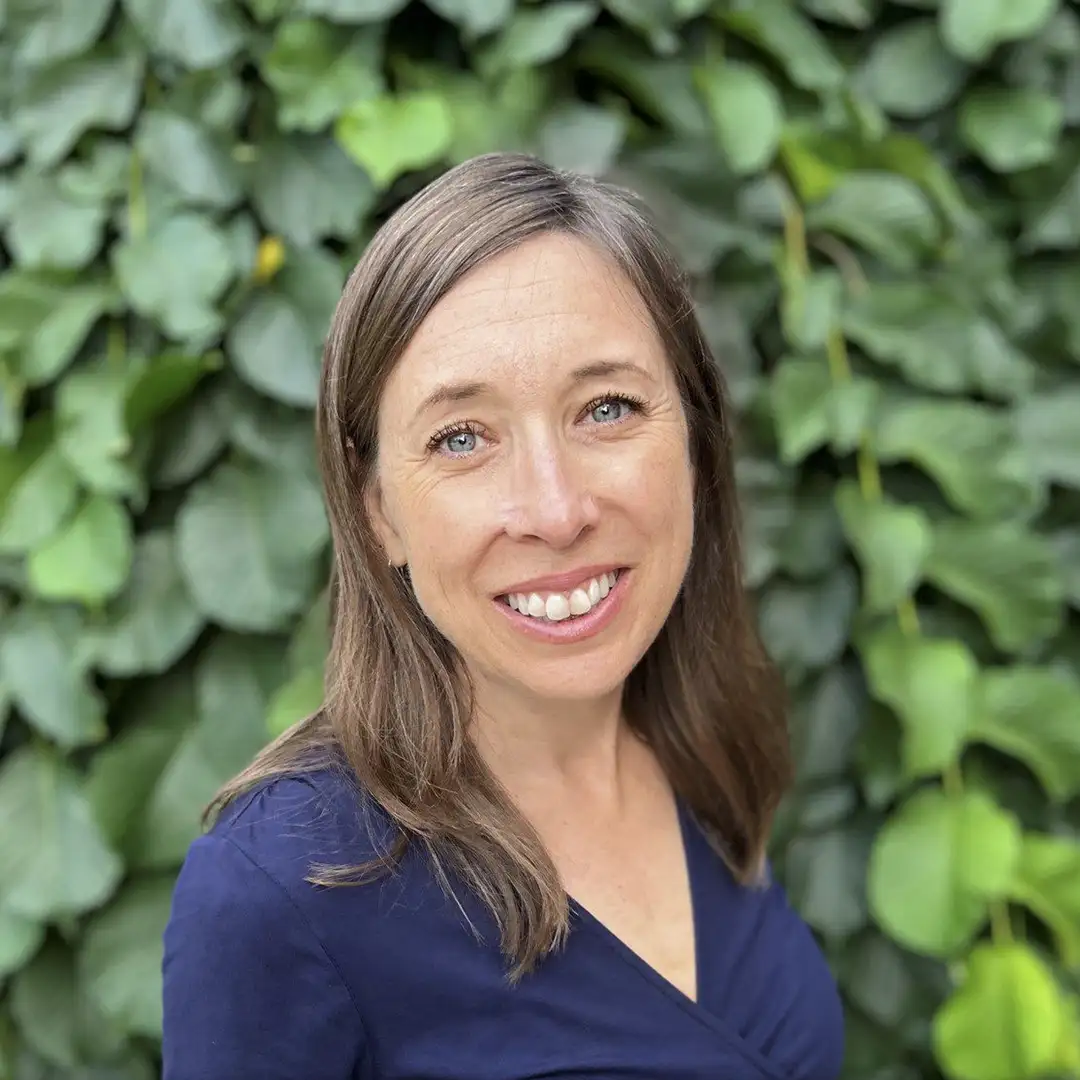
Her Story
Pamela Pavek, a Resource Conservationist for the USDA’s Natural Resources Conservation Service (NRCS) in Moscow, Idaho, has been named the national winner of the Conservation Planner 2022 Hugh Hammond Bennett Award for Conservation Excellence for her outstanding conservation efforts.
Curtis Elke, NRCS ID State Conservationist says, “Conservation Planning is one of the most important technical assistance products on our NRCS conservation shelf we offer the customer. Pamela has demonstrated her expertise in conservation planning and innovative thinking over the years and I am so very proud of her receiving the National Conservation Planning Partnership, Hugh Hammond National Planner Award.”
Pavek graduated from University of Nebraska-Lincoln in 1997 with a Bachelor of Science in Environmental Studies and holds a master’s from Washington State University in Crop Science. She continues her family’s legacy of serving with NRCS, following in her father’s 38-and-a-half-year career as a soil scientist in Nebraska. She started at NRCS in 2005 and has worked in several roles, including one with plant materials, before landing a role as a soil conservationist in 2016. In her current role, Pavek develops conservation plans for the conservation reserve program and helped the District Conservationist manage hundreds of contracts for the Environmental Quality Incentives Program, the Conservation Stewardship Program, and Wetland Reserve Easements.
Sam Wozniak, NRCS ID says, “Pamela has been a leader in conservation in Palouse region for the past 15-20 years due to her persistence in tackling difficult conservation projects, making meaningful connections with landowners, and serving as a role model for many young soil conservationists and the greater community. She has been a key member of a network of partners in the advancement of Palouse Prairie restoration. She authored the Forb Seedling Identification Guide for the Inland Northwest and a Technical Note on Plants for Pollinators in the Inland Northwest during her time at the Pullman Plant Materials Center and has implemented several of the larger scale Palouse Prairie restorations as a Resource Conservationist. She led the conservation planning on Idaho’s first Stage 0 wetland restoration project and has saved tons of soil through her conservation farming efforts. Many landowners keep coming back to work with Pamela because of her enthusiasm and sincere advice. Pamela has also been a role model and essential trainer for many younger employees in the Moscow office due to her wealth of knowledge and eagerness to help others. Due to her achievements in publishing, training younger employees, and presenting conservation information at Washington State University and the Native Plant Society, Pamela’s impact will long outlast her time at NRCS.”
Pavek is a leader in expanding the reach of conservation in the community. She leads training and provides numerous presentations, lectures, and learning opportunities for new conservationists and the public. She is also the author of numerous publications on pollinators, weed control, cover crops, and other conservation topics. Kyle Lunsford, NRCS ID says, “After moving across the country for my job, Pamela was instrumental in helping me learn the common plants, land management techniques, and cropping systems of the Inland Northwest. She has helped me learn and develop my conservation planning and technical skills which has been key to my early success as a soil conservationist. She takes great pride in her job and enjoys being a mentor to others—she is a great example for developing conservationists to follow. She is an integral part of Team 3 and I have thoroughly enjoyed working alongside her during my first year and a half with the agency.” In addition to implementing conservation by consulting directly with landowners, Pavek maintains a close working relationship with many regional partners including the Latah Soil and Water Conservation District, Palouse Conservation District, Idaho Fish and Game, Palouse Land Trust, University of Idaho Extension and Washington State University.
It is clear to Pavek’s colleagues and the landowners she serves that she cares about conservation planning being done right. Jennifer MacMillian, NRCS ID says, “Pamela is the ideal role model for any conservationist. She has exemplary qualities such as high intelligence, confidence, empathy, drive, and excellence in advocacy and communication. Her experience and accolades are impressive on their own, but add her kind, caring, witty, personality and she is unstoppable. She has contributed immensely to NRCS and affiliated partners throughout her career and we are incredibly lucky to have a leader like her in our midst.” She goes above and beyond planning process, and makes sure producers feel comfortable with the language being used in contracting, specifications, and implementation. While she excels at all she does, Pavek has a particular strength in writing plans for planting, pollinator habitat, and riparian vegetation. Sarah Johnson, NRCS ID says, “Pamela has been such a wonderful person to work with the past four years. She has patience to stop with her busy workload to help answer questions I might have, concerning understory vegetation which could help me identify the habitat type and silviculture treatment to proceed with. Her knowledge in botany always amazes me and her skills and knowledge only expand from there. Not only is she a hard worker and is willing to help others but her overall presence is warming and welcoming which makes it easy to approach her. We are very lucky to have her on the Moscow team and I know without having to ask anyone else they would feel the exact same way!” She’s the planner who always has a backpack full of books and tools strapped to her back while she walks the property with a client and is always prepared for whatever questions they may have, or resource concerns they may encounter.
2022 Regional Planner Winners:
Pacific (ID) – Pamela Pavek – National Winner
Northern Plains (MT) – Charles Roloff
Southwest (CO) – Rebecca Burton
South Central (TX) – Glen Minzenmeyer
North Central (OH) – Dee Wiseman
Northeast (NY) – Steve Lorraine
Southeast (GA) – Gabriel Outlaw
2021 Award Winners
2021 Conservation Producer Recipient:
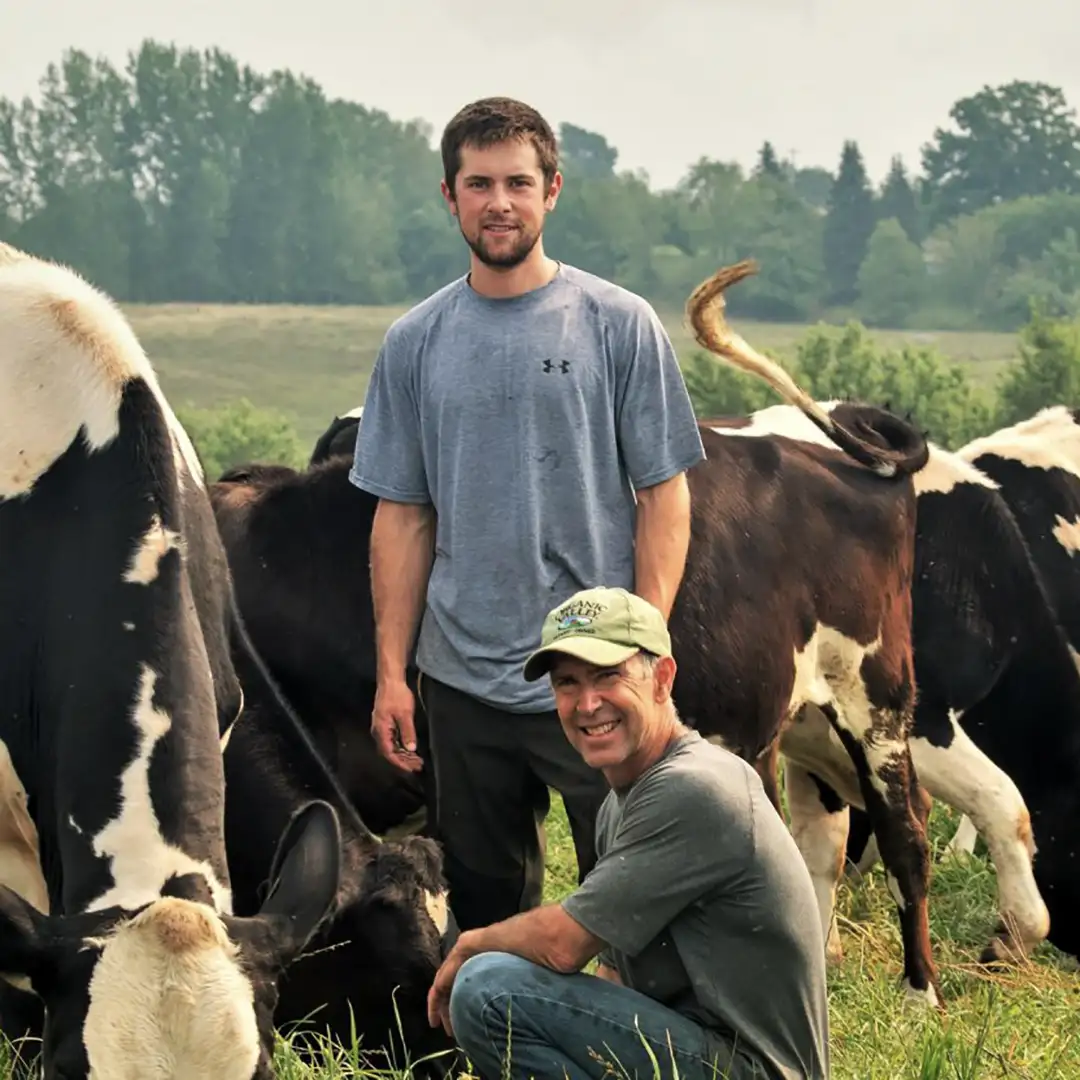
His Story
Guy Choiniere has been named the winner of the Conservation Producer 2021 Hugh Hammond Bennett Award for Conservation Excellence for their outstanding conservation efforts on their farm, Choiniere Family Farm, in Highgate, Vermont.
Choiniere says the health of the soil is the health of the farm. This land ethic drives his actions on a dairy farm that’s been in the Choiniere family since 1945. While navigating changes in the farm economy, climate and farming practices, the Choiniere Family Farm has become a model of innovation and adaptability for other New England dairies. Soil health and erosion control practices have kept the farm productive and resilient despite an increase in severe storms, rainfall, and periods of drought in northwest Vermont.
Justin Tuthill, Vermont USDA’s Natural Resources Conservation Service (NRCS) Acting State Conservationist says, “The Choiniere’s commitment to conservation planning and protecting soil and water resources is an inspiration to NRCS, and Choiniere has been an instrumental and passionate spokesperson for the important role of soil health in Vermont.”
Prompted by an unstable market for conventional milk in the 1990s, Choiniere studied and then transitioned to organic production. It’s a move he said was good for his cows, land, and the bottom line. A few years later he seeded 25 acres of corn to permanent hay and pasture in order to convert his herd to 100% grass-fed. That move fetched an even better price for their organic milk.
After taking over the farm, Choiniere also began addressing environmental issues with assistance from NRCS. The conservation plan he developed remains a work in progress today. To prevent soil erosion and improve water quality, the Choinieres planted 5,000 trees along banks of the impaired Rock River. They also conveyed a 51-acre river corridor easement that designates an area where the river can meander naturally. The land can still be farmed, but the river will not be dredged. There is also a permanent 50-foot naturally vegetated buffer along 12,000 feet of the river’s bank.
Keeping nutrients on the farm and out of the river was also aided when Choiniere switched from conventional liquid manure storage to an innovative compost bedded pack system. During the winter, the cows are fed hay in large hoop barns designed to mimic the comfort and atmosphere of being on pasture. Excess hay provides bedding and catches manure before being trod down into compost. When the cows resume rotational grazing in May, pigs are let into the barns to root around and expedite the composting process before it is spread on fields as nutrient-rich fertilizer. Choiniere is an ambassador to help other dairies manage bedded pack systems.
Sarah Larose, NRCS Vermont Soil Conservationist said, “The Choiniere Family Farm is one of the most deserving farms for this prestigious award, and they have enhanced their conservation efforts for decades, now spanning over three generations. Their willingness to listen, learn, and implement conservation practices is commendable.”
The Choiniere Family Farm participates in Vermont’s roadside sign program that identifies conservation practices like rotational grazing, cover crops, no-till and streamside plantings. The Choinieres, who were Vermont’s Conservation Farmers of the Year in 2009, were also selected as recipients of the 2021 New England Leopold Conservation Award.
Jill Arace, Executive Director of the Vermont Association of Conservation Districts said, “We’re grateful to the Choiniere family for their careful stewardship of the land and close attention to soil health and water quality as they produce the healthy milk we drink. And we’re glad to be part of the community of organizations that have helped this farm be a model for others and achieve this important recognition. ‘It takes a village’ as they say, and many organizations provided technical and financial assistance to help the Choiniere family both build a successful dairy operation and achieve their conservation goals. This assistance, often supported with public funds, is available to farmers throughout Vermont and beyond, and is an important part of the equation of supporting family farms, growing our nation’s food, preserving our beautiful landscape, and protecting the environment for future generations.”
2021 Conservation Planner Recipient:
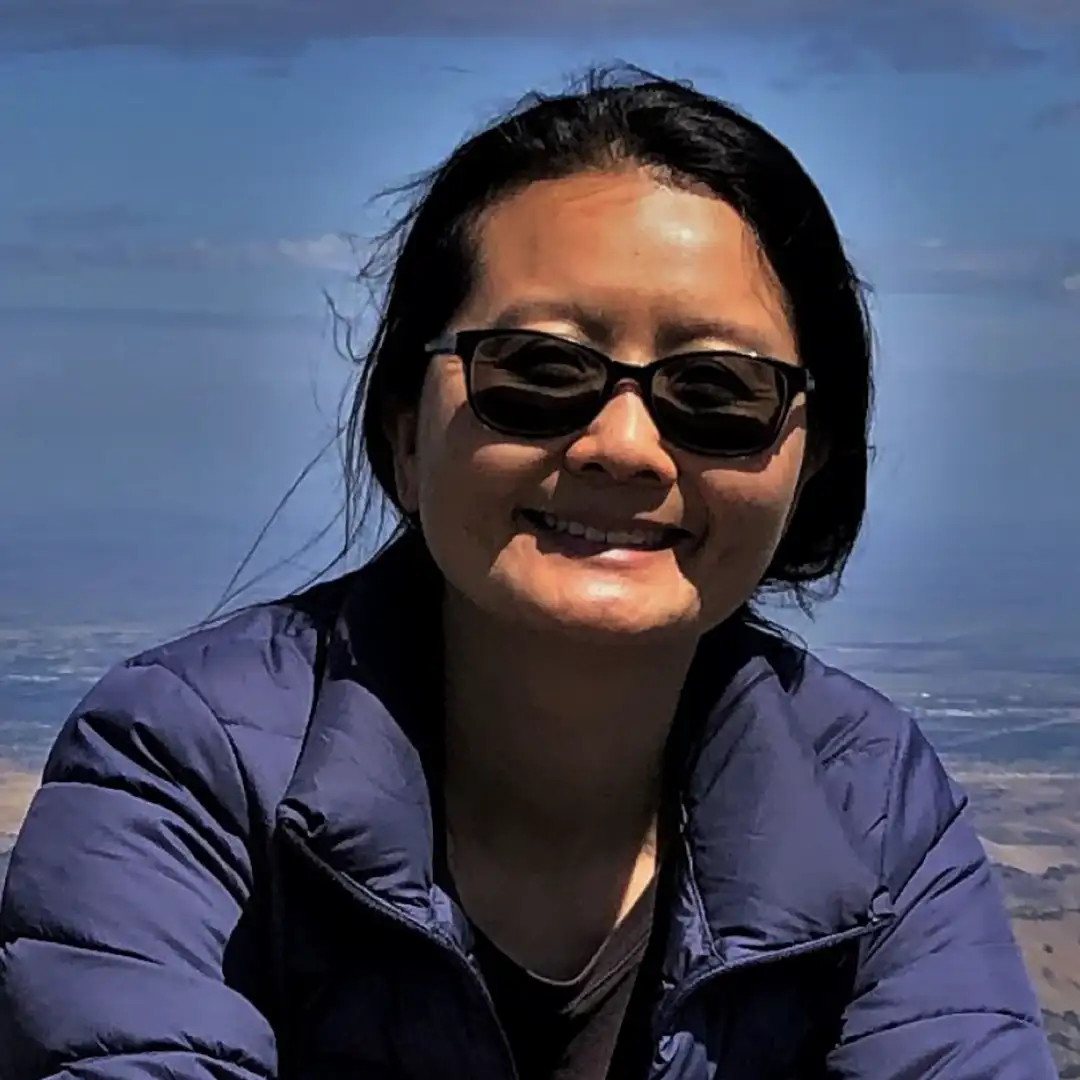
Her Story
Ling He, a Rangeland Management Specialist for USDA’s Natural Resources Conservation Service (NRCS) in Alameda County, California, has been named the winner of the Conservation Planner 2021 Hugh Hammond Bennett Award for Conservation Excellence for her outstanding efforts as a conservation planner.
“I am surprised and excited to receive the [Hugh Hammond Bennett] award. Thanks to the National Conservation Planning Partnership for the recognition and high honor. I’m feeling humble and very grateful for the support and recognition from my agency [NRCS] and colleagues. To me, this award goes to all the people I work with, my NRCS and RCD colleagues, local conservation partners, as well as the producers,” says He.
He serves in Livermore, California, covering all of Alameda County in the east San Francisco Bay area. She has worked in the Livermore Local Partnership Office for thirteen years and has been a certified conservation planner for over eight years. She serves as the office lead for addressing rangeland and plant-related issues and also manages the Conservation Stewardship Program (CSP) for multiple rangeland clients. In 2018, she became a Certified Rangeland Manager, a professional certification provided by the California-Pacific Section of the Society for Range Management (CalPac-SRM), further demonstrating her abilities in this field.
He spends much of her spare time hiking and exploring the beautiful open spaces of the Bay Area. Her personal interests ultimately benefit her professional accomplishments, as she knows the landscapes, the growth patterns of our local plant communities, and sees the changes throughout the years. She brings that enthusiasm and awareness to each of our clients, providing recommendations that help achieve their individual goals.
He frequently provides translation support to Chinese producers in neighboring counties, such as Santa Clara, San Benito, and San Francisco counties. She provided translation assistance to Chinese producers at multiple workshops cohosted by University of California Cooperative Extension (UCCE), Loma Prieta Regional Conservation District (RCD), and NRCS on Water Quality Regulation, Weed Management, and Nutrient Management. She volunteered to provide translation review for five program appendices that were translated into Chinese.
He is a member of the Monarch Plant Material Work Group and the East Bay Monarch Work Group. Her involvement contributes to high-quality technical assistance for NRCS clients in weed management, plant selection and establishment, monitoring of milkweed and nectar plantings, and general technical support for the Alameda County Conservation Partnership’s Monarch Program to help partners and ranchers increase habitat for this declining species.
He collaborates closely with the Alameda County Resource Conservation District on several annual monitoring projects and assists with complex vegetation-related projects. She led and completed vegetation and photo monitoring for four riparian restoration sites and has coordinated with clients and subcontractors on maintenance activities with adaptive management strategies. She has also assisted with educational projects for local students.
As part of a larger-scale effort to improve the access and utilization of public lands for grazing, He served as facilitator and technical expert during negotiations between a local water agency and their grazing lessee. She assisted with a review of the grazing lease agreements, interviews of agency staff, and literature reviews. Much of Alameda County’s viable rangeland is owned by public agencies and leased to private ranchers. Her efforts help to ensure fair and equitable processes which ultimately result in better management of these critical lands.
2020 Award Winners
2020 Conservation Producer Recipient:
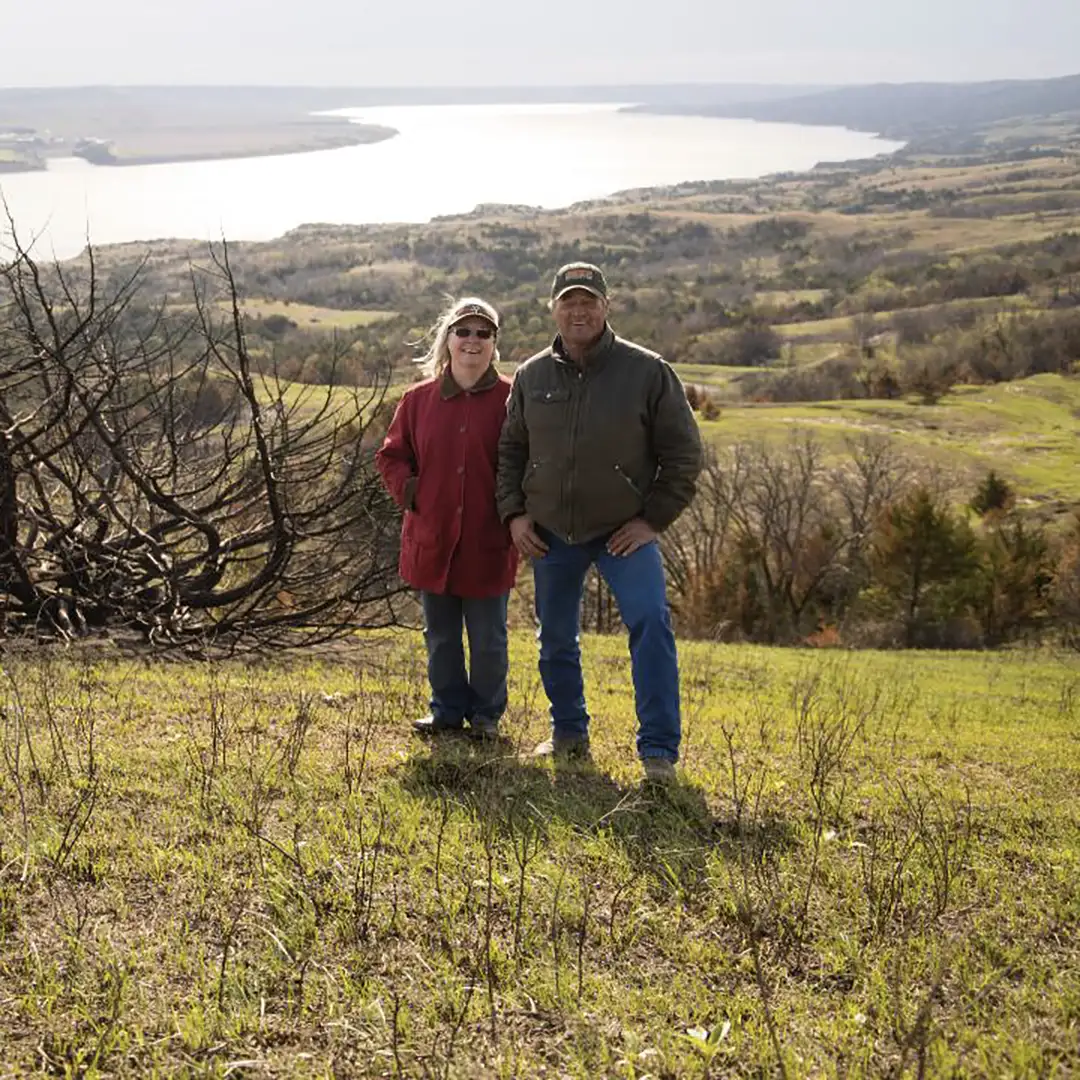
Their Story
Richard and Sara Grim operate their 3,600-acre family ranch in Gregory County, South Dakota.
The Grims are recognized for successfully pioneering prescribed burns to control the invasive eastern red cedar, which rapidly infest open lands and choke out native grasses in many areas of the state. The Grims joined with like-minded neighbors, conservation professionals and partners to establish the Mid-Missouri River Prescribed Burn Association. This association has raised grant dollars to treat 2,000 acres annually.
Richard and Sara were also early adopters of cover crops and have also incorporated other innovative practices like tissue sampling to ensure their nutrient application is more precise and effective. They have worked with the Natural Resources Conservation Service (NRCS) and the Gregory County Conservation District for years on a comprehensive and flexible resource management plan that integrates conservation practices to improve pasture design and utilization, combat invasive plants, reduce erosion, improve water access, improve forages, and manage nutrients.
The Grims serve as mentors for those who need help in building healthier soil, crops or livestock. You can hear their success story in the YouTube series called “Our Amazing Grasslands“ www.bit.ly/GrimRanch.
The local field office staff in Gregory County will be recognized for their assistance to the Grims. Congratulations to Andrew Steffen, NRCS district conservationist, Brandon Walter, NRCS biologist, Kenneth Steele, Gregory County Conservation District’s Manager, and Tina Schonebaum, Gregory County Conservation District’s secretary.
2020 Honorable Mentions:
Richard & Sara Grim – Bonesteel, SD
Brent and Carrie Fowler, McDonough – Rushville, IL
Elton Coley, Hardin County SCD – Muscle Shoals, AL
Cornelius Joe, Hale County – Greensboro, AL
Dan Boerst, Waupaca – Manawa, WI
2020 Conservation Producer Recipient:
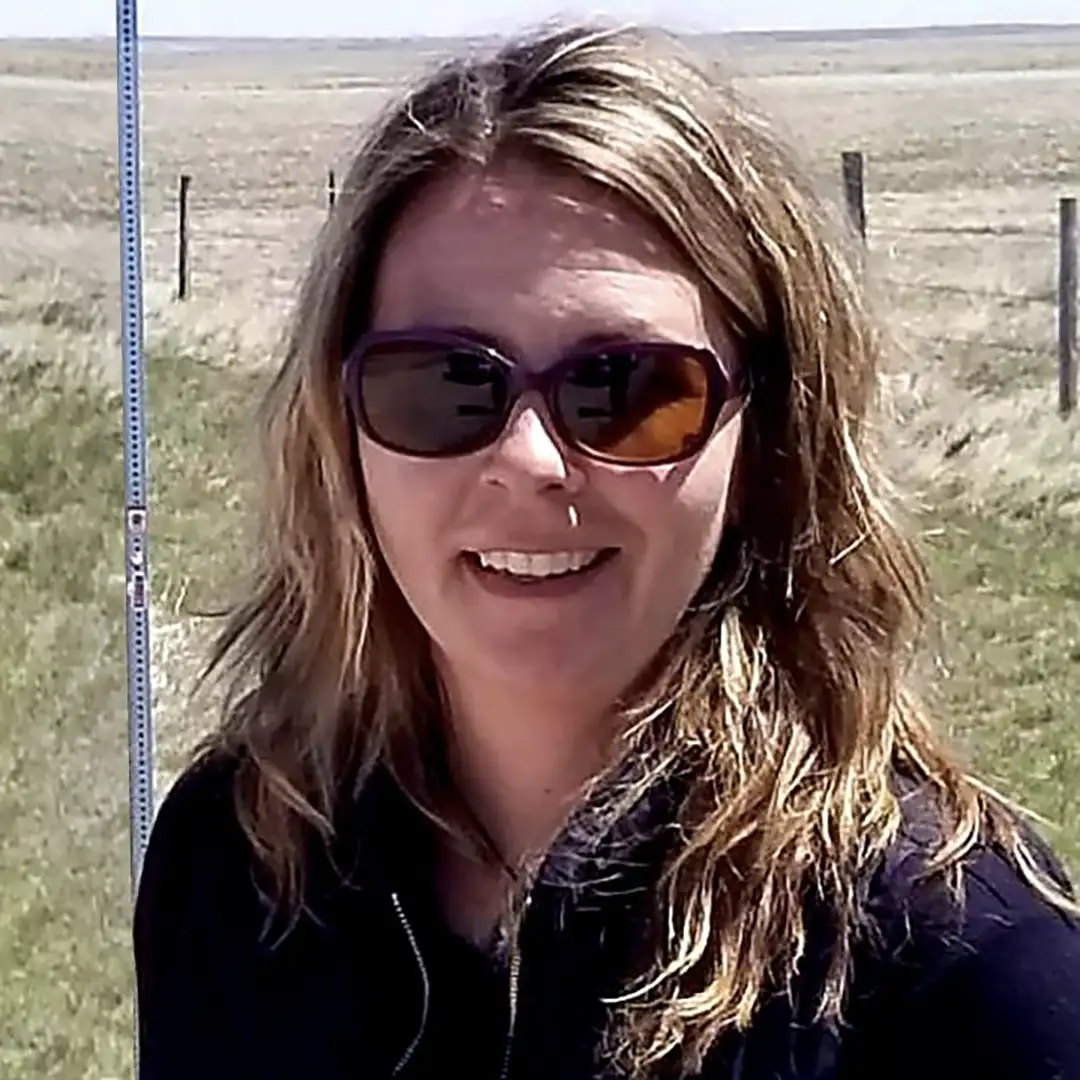
Her Story
Sylvia Hickenlooper is an NRCS soil conservationist in Boulder County, Colorado and is recognized as this year’s award-winning conservation planner.
Over the past 14 years as a certified planner, Hickenlooper has successfully developed over 120 conservation plans and helped implement hundreds of practices to help farmers, ranchers, forestland owners and others improve their crop production, soil health, water quality, forest stands, grazing lands and more on nearly 200,000 acres.
Throughout her 18-year career with NRCS, Hickenlooper has dedicated herself to outreach, education and building partnerships that further the agency’s mission. Two of her major successes include working with the conservation district and other partners to develop “From Our Lands to Your Hands,” a hands-on program for fourth graders to learn about the importance of agriculture, that ran for 10 years and reached over 10,000 students in Boulder and Weld Counties. The second is the Annual Soil Revolution Conference, a statewide multi-partner annual event that has reached 600 commercial producers over the past four years, about diverse production systems and soil health principles.
“Sylvia exemplifies the qualities we want to see in a top conservation planner. She is recognized by coworkers and partners for the enthusiasm, knowledge and excellent communication skills that she brings to her job as she works with private landowners to get conservation on the ground and protect our natural resources for the next generation,” said Astor Boozer, NRCS regional conservationist and NCPP co-chair.
2020 Honorable Mentions:
Sylvia Hickenlooper, Boulder Valley & Longmont Conservation District – Longmont, CO
Diana Waller, East Stanislaus RCD & West Stanislaus RCD – Modesto, CA
John F. Harryman, St Clair County – Belleville, IL
Devin Best, Upper Salinas-Las Tablas Resource Conservation District – Templeton, CA
Holly Giombi, Marion County – Knoxville, IA
2019 Award Winners
2019 Conservation Producer Recipient:
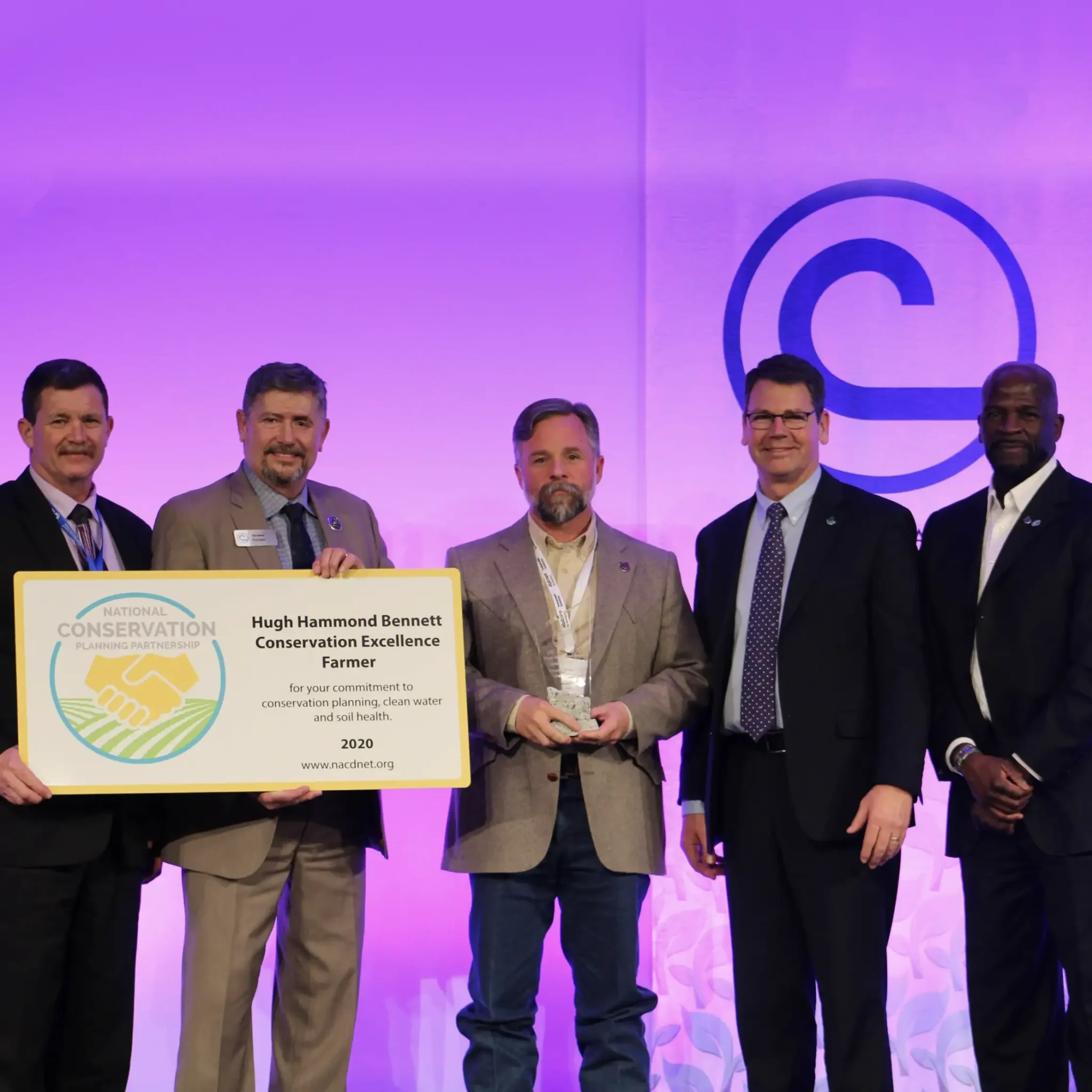
His Story
David Daigle is a true conservationist, constantly thinking about ecosytem functions and integrated resource management.
He not only performs conservation practices on his farm by implementing his Resource Management System plan, but all tracts of Daigle Farms are operated with an Integrated Resource Management approach. His conservation practices, some of which date back to 1996, include prescribed burns, fire breaks, prescribed grazing, forest stand improvements and nutrient management.
David is extremely involved in his state and local community, serving as a board member for the Calcasieu Soil and Water Conservation District and president of the Louisiana Association of Conservation Districts. He serves as a board member on the Louisiana Native Plant Initiative and The Coastal Plain Conservancy and was a previous board member for the Imperial Calcasieu Resource Conservation and Development.
In 2016, David co-authored a publication entitled “Prescribed Grazing – A Management Tool for Wetlands,” to promote awareness of the resources in the Gulf Coast region and how to protect them
He serves as a role model for many other producers, hosting education field days and workshops on his farm and working hard to spread the conservation message.
2019 Conservation Planner Recipient:
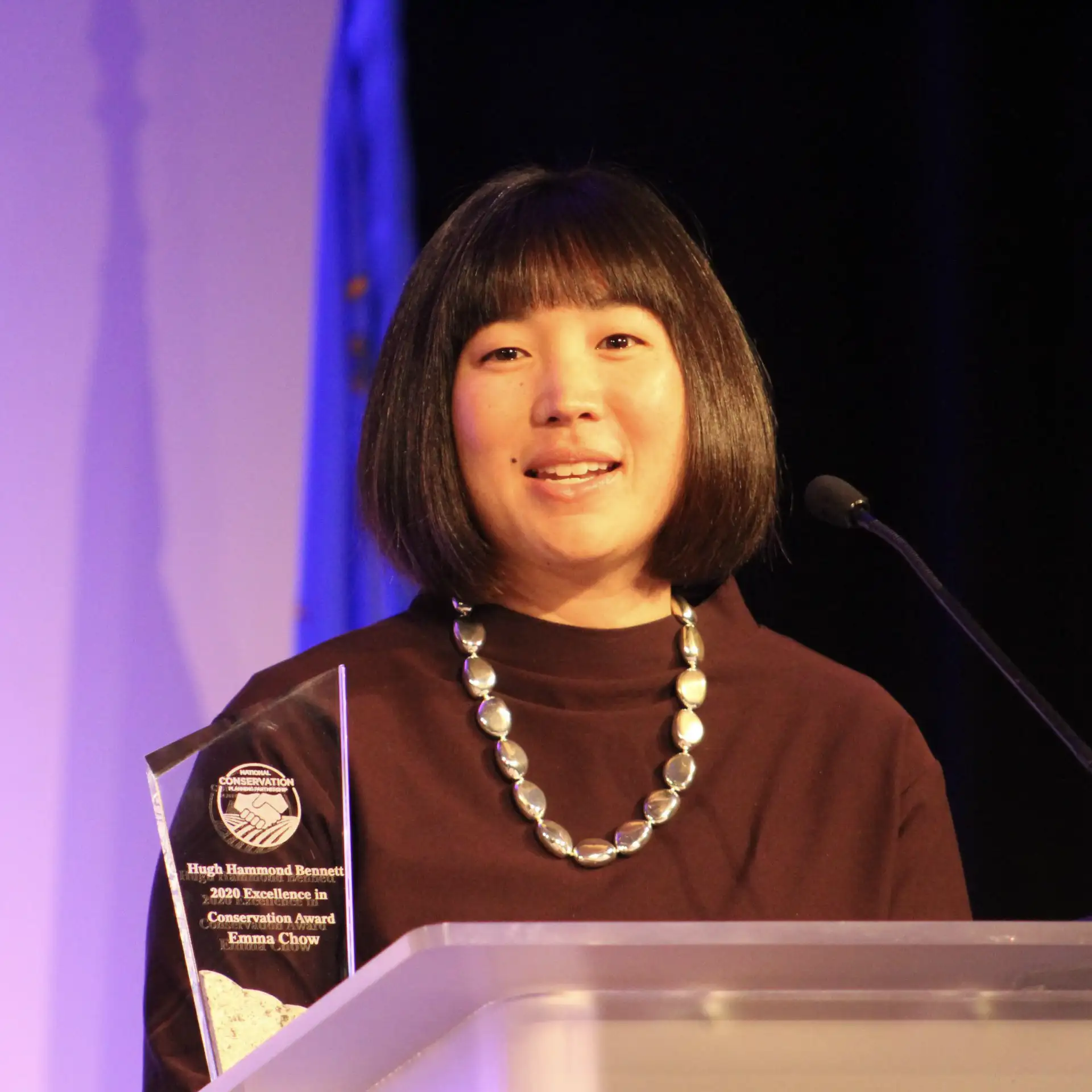
Her Story
Emma graduated from California Polytechnic State University – San Luis Obispo with a Bachelor of Science in environmental management and protection and a minor in city and regional planning, sustainable environments.
She participated in the California-NRCS Leadership Development Program, strengthening her leadership skills to help her succeed.
As an employee of NRCS for over 10 years, Emma has worked tirelessly to promote conservation. Following the catastrophic Tubbs Fire, Emma immediately mobilized staff to help clients whose property burned. Her drive to help property owners control soil erosion after fires helped the forest community recognize the need to look at their entire property and effects on the watershed, rather than just the area around their homes.
Some of her other efforts have included managing EQIP contracts, providing outreach after flood events, expanding the forestry program and coordinating to create outreach videos for LGBT, National Organic Campaign and High Tunnel success stories.
Emma has a range of conservation planning experience with vineyards, orchards, forests and diverse crops, allowing her to provide assistance in a wide variety of situations.
Her dedication to the conservation message and desire to help her community grow stronger is astounding and an inspiration to us all.
2018 Award Winners
2018 Conservation Producer Recipient:
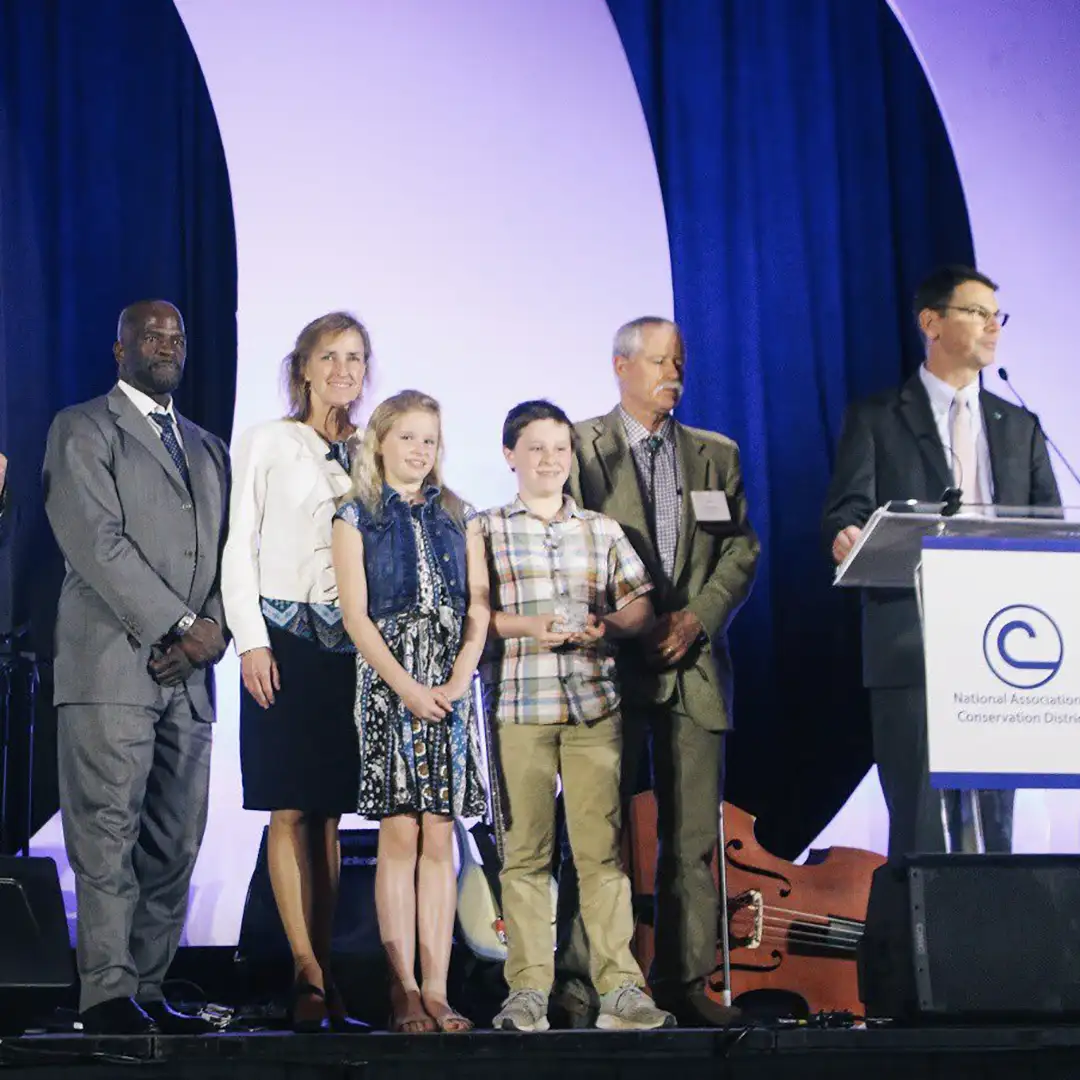
Their Story
The Rominger brothers have long been leaders in conservation planning on the farm and ranchlands that they own and operate. They were pioneers in the use of conservation tillage on their highly erodible land in the 1980’s, and enrolled hundreds of acres into the Conservation Reserve Program.
They have implemented over 20 conservation practices to protect the natural resources on the land they operate, including water facilities on rangeland, stabilizing streambanks with the channel bank vegetation practice, fencing, pipeline, and prescribed grazing.
Cropland practices have included conservation tillage, tree and shrub establishment, micro irrigation systems, irrigation water management, cover crops, and structures for wildlife and hedgerows.
The Romingers are also in the process of closing an easement through the NRCS Agriculture Land Easement program, protecting their land from development hundreds of acres of rangeland in perpetuity. The Rominger brothers realize that if a world with a rapidly growing population is going to be fed, then the quality of the soils they manage must improve, whether by adding compost, utilizing crop residues, or planting cover crops.
The Romingers have worked to pioneer new approaches to conservation planning long before other farmers, financial incentives, and regulations were in place. The Romingers are at the forefront in the agricultural community of innovation and adaptability, not merely complying with regulations, but showing others the way to meet these regulations. Over the decades, the Romingers have provided leadership to the farming community through one-on-one interaction with other growers.
Whenever the local NRCS or Yolo County RCD has a group coming in for a tour, the Rominger brothers are always more than willing to spend time explaining conservation is not just an add-on to their operation if they have the time, but an integral component in the overall operation.
The Rominger brothers developed a conservation plan that specifies how the natural resources on the ranch are to be protected and allowing for a profitable operation. Their conservation plans implemented throughout the decades have helped them become more resilient to even the greatest conservation challenges.
2018 Regional Producer Honorable Mentions:
Winner: Bruce and Rick Rominger, Rominger Brother Farms, Inc. – Winters, CA
Yolo County Resource Conservation District
CA NRCS Woodland Service Center
Fanny Ye, Soil Conservationist – NRCS
Corey Shake, Biologist – Point Blue Conservation Science
Heather Nichols, Executive Director – Yolo County Resource Conservation District
Mary Kimball, Executive Director – Center for Land Based Learning
Nick Gallagher, Rangeland Management Specialist – NRCS
Jessa Kay Cruz, Senior Pollinator Conservation Specialist – Xerces Society
Top 3 – James E Biddle, Jr, Mill Hill Farms, LLC – Williamsburg, PA
Top 3 – Rod Vorhees, Lazy VJ Farms – Fredonia, KS
Guy Choiniere, Choiniere Family Farm – Highgate, VT
Clay G., F. Logan and Frank A. Govier, Glen Govier and Sons – Broken Bow NE
Richard and Sara Grim, Grim Ranch – Bonesteel, SD
Lampe Farms Co. – Havelock, IA
David Haubein, Haubein Farms – Lockwood, MO
Aden & John Mott-Restivo, Legends Creek Farm – Foster, RI
Scott Richardson, Warren County School System – Warrenton, GA
Joe Rothermel, RDR Farms, Inc. – Broadlands, IL
Mike Starkey, M&J Starkey Farms – Brownsburg, IN
Fred Yoder, Yoder Ag Services, LLC – Plain City, OH
2018 Conservation Planner Recipient:
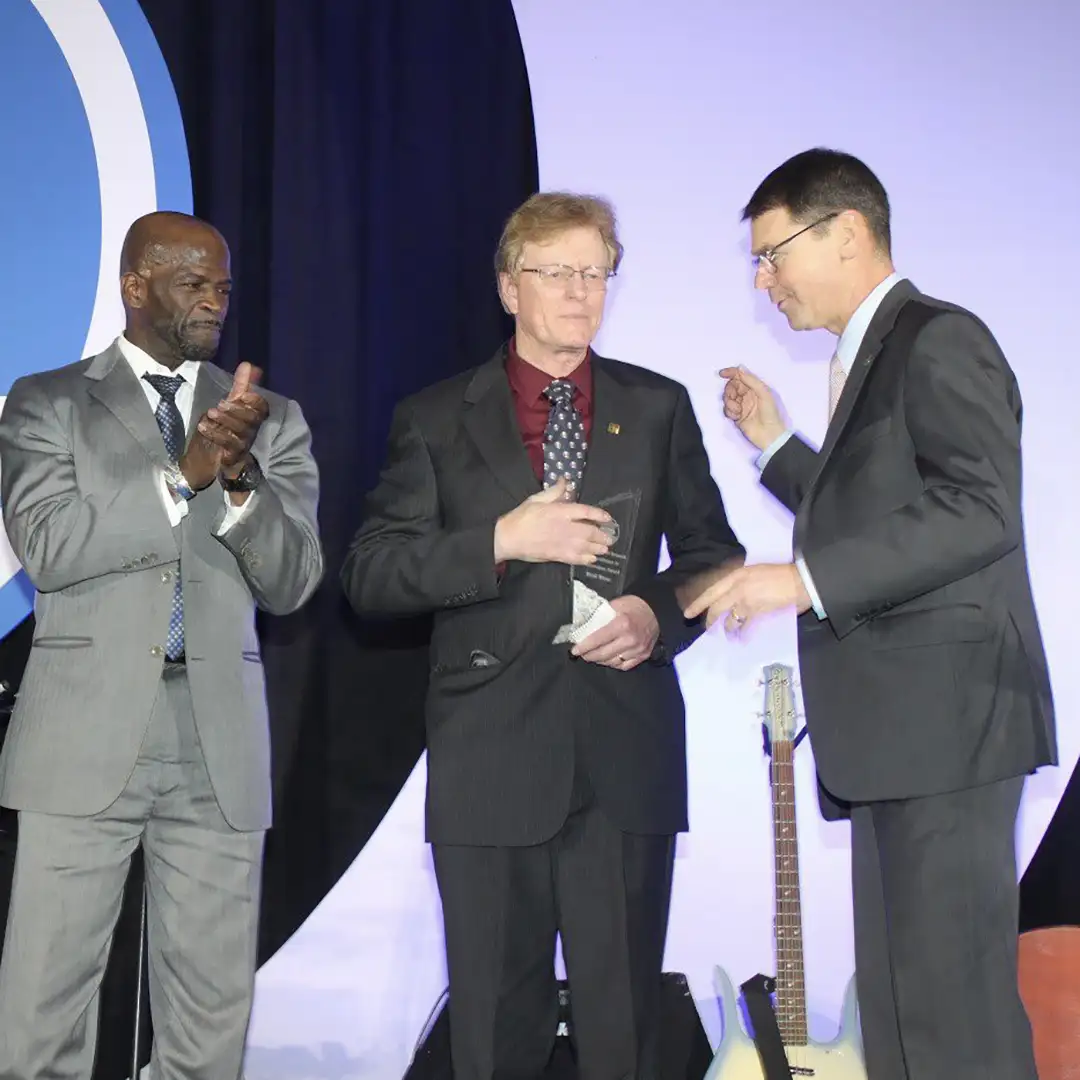
His Story
As an employee of the Stearns County SWCD for 38 years, Brad truly understands the real value of communication with both landowners and the public to get conservation practices on the land.
He graduated with a Bachelor of Science degree in Soil Science from the University of Minnesota in 1977. As a certified Conservation Planner, he has been an invaluable resource to the Stearns County SWCD, and other natural resource organizations in Minnesota ever since.
Wenz’s specialty is the one-on-one work he does with farmers and ranchers to engage them in conservation planning, implementing conservation practices, and showcasing their work through annual conservation tours.
Over his career, he has promoted and provided technical assistance to help landowners maintain and improve private lands and their management; implement better land management technologies; protect and improve water quality and quantity; maintain and improve wildlife and fish habitat; enhance recreational opportunities on their land; maintain and improve the aesthetic character of private land; explore opportunities to diversify agricultural operations, and develop and apply sustainable agricultural systems.
Farmers and ranchers look to Wenz for his experience and leadership. Known as the “Godfather of Conservation,” he is a passionate advocate and mentor for both local staff and partners.
His extensive knowledge of conservation planning has led him to see it as the most important tool in the toolbox. He has informed farmers, ranchers, and staff of the renewed National Conservation Planning Partnership effort and has assisted to bring on-farm planning back to the forefront of conservation technical assistance.
Over his career, Brad has walked approximately 120,000 acres of land, developing plans and alternatives and implementing them.
Education of the next generation of conservationists is important to him, and he has impacted over 10,000 students over his career by teaching them the value of our natural resources.
From working with farmers in conservation planning to solving natural resource concerns, educating new conservationists, sharing natural resource conservation information with students and farmers, and developing new cutting-edge conservation planning tools, Brad is the epitome of the Hugh Hammond Bennett Award for Conservation Excellence – Conservation Planner Award.
2018 Regional Planner Honorable Mentions:
Winner: Brad Wenz, Stearns County SWCD – Waite Park, MN
Top 3 – Mark Green, USDA, NRCS – Springfield, MO
Top 3 – Megan Burgess, USDA, NRCS – Kenton, OH
Al Craney-Skagit, Conservation District – Mount Vernon, WA
David Daniels, USDA, NRCS – Wharton, TX
Donald R. Donovan, USDA, NRCS – Rockville, IN
Calvin N. Hartman, Howard County SWCD – Kokomo, IN
James Howard, USDA, NRCS – Half Moon Bay, CA
Drew Mather, USDA, NRCS – Hollister, CA
Jeffrey Parker, Steuben County SWCD – Bath, NY
Rick Rath, Missouri Dept of Conservation – Greenfield, MO
Kate Sayles, Northern RI Conservation District – Wakefield, RI
Derek Thompson, USDA, NRCS – Kendallville, IN
2017 Award Winners
2017 Conservation Producer Recipient:
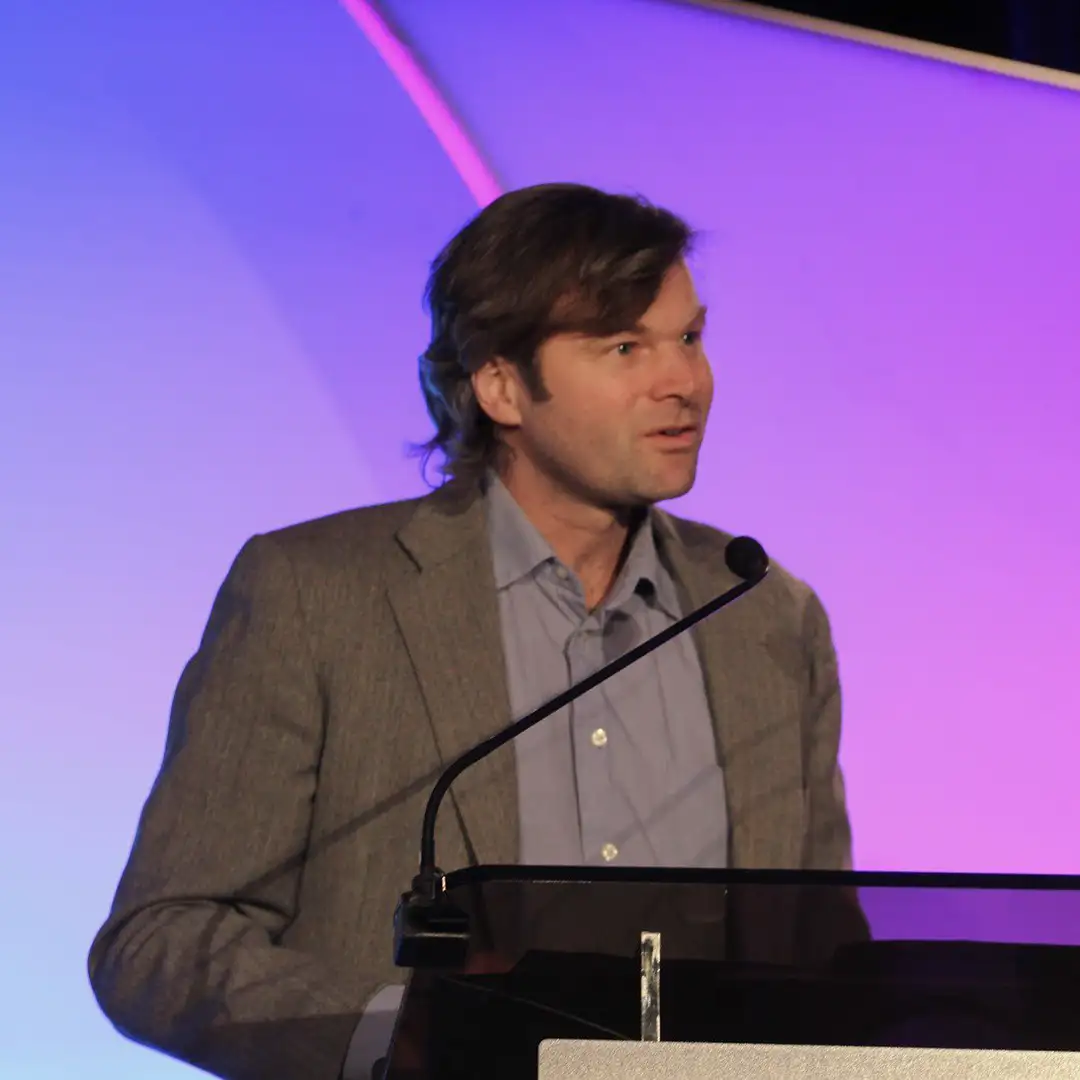
His Story
The inaugural recipient of the Hugh Hammond Bennett Excellence in Conservation Award is Dorn Cox.
Dorn operates a 250-acre multigenerational family farm with his wife, Sarah, and two boys in Lee, New Hampshire. He is an NACD Soil Health Champion and has utilized the Resource Stewardship Evaluation Tool on his farm to evaluate his conservation stewardship performance. Dorn is a co-founder of the FarmOS software platform and focuses on collaborative open source research and development for regenerative agricultural systems.
He has developed and shared systems for small-scale grain and oil seeds processing, biofuel production, and no-till and low-till equipment and cover crop systems to increase carbon capture and soil health.
He is also a founding member of the New England Farmers Union, the Great Bay Grain Cooperative, and the Oyster River Biofuel Initiative. He serves as a county supervisor and vice-chair of the Strafford County Conservation District and is vice president of the New Hampshire Association of Conservation Districts. Dorn holds a Bachelor of Science degree from Cornell University and a PhD from the University of New Hampshire in Natural Resources and Earth Systems Science.
2017 Regional Producer Honorable Mentions:
Winner: Dorn Cox – Lee, NH
Strafford County Conservation District
NH NRCS Epping Field Office
Alena Warren, District Manager, Strafford County Conservation District
Epping Field Service Center:
Keri Neal – District Conservationist
Matt Larkin – Soil Conservationist
Tim Tucker – Soil Conservationist
Daimon Meeh – Resource Conservationist
Julie Tosten – Civil Engineer Technician
Danel Stadig – Program Assistant
Sue Sargent – Program Assistant
Top 4 – Jimmy Emmons – Leedey, OK
Top 4 – Brendon Rockey, Rockey Farms – Center, CO
Top 4 – Bobby Whitescarver and Jeanne Hoffman – Swoope, VA
Jay Baxter, Baxter Farms, Inc. – Georgetown, DE
Jon and Sylvia Bednarski – Sherwood Acres, KY
Keith and Brian Berns – Bladen, NE
David Daigle – Ragley, LA
Dan Diaz – Lena, IL
Annie Dee, Pickens Co. – AL
Dennis Hoyle – Roscoe, SD
Salem Saloom, Conecuh Co. – AL
Cody and Deanna Sand – Forbes, ND
Michael Willis – King City, MO