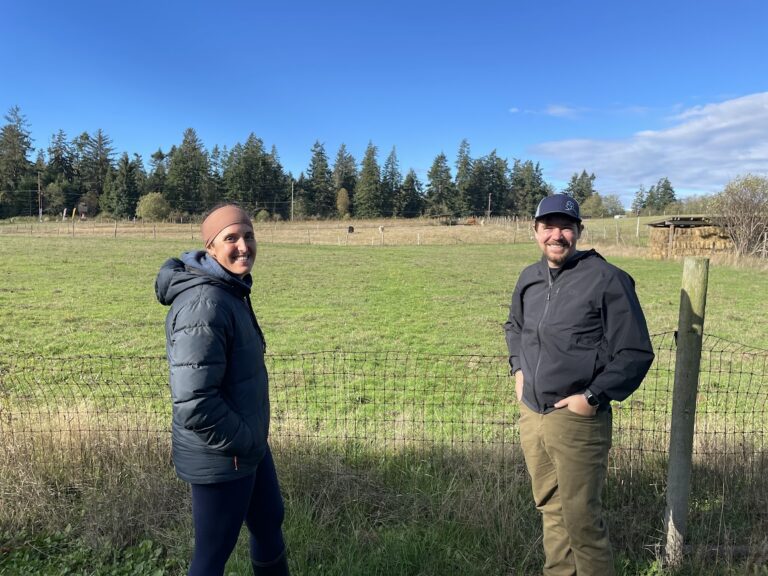
Meet Kelsi Mottet, a senior Conservation Planner for the Whidbey Island Conservation District in Washington. A sixth-generation islander, her roots are planted in her community. One of the most impactful steps in her career was achieving certification as a Level 3 Conservation Planner.
Why Level 3 Certification Matters
Kelsi describes Level 3 certification as the “gold standard” in conservation planning. “Level 3 means I have the confidence and training to execute the full nine-step conservation planning process,” she explained.
But for Kelsi, certification was more than a credential. The structured and often rigorous training made her feel like she was working towards something bigger—work that would directly benefit the people and land that she serves.
Level 3 Classes
Level 3 training expands on the foundational skills and knowledge of conservation planning. In addition to required courses, planners can work with supervisors to identify additional training specific to their region and interests.
On her path to Level 3, Kelsi took several classes that helped her better serve landowners with diverse needs, including:
- Conservation Planning Part 2 & 3: Hands-on courses that teach planners how to execute a full conservation plan
- Soil Health and Sustainability for Field Staff: Supports her work with producers
- Cultural Resources training: Focused on tribal considerations, archaeology, and compliance issues
- Wetland Delineation training: A local course Kelsi pursued due to the critical need of wetland solutions where she lives
The Training Process
With a mix of online modules, in-person courses, and fieldwork, Kelsi’s training introduced her to new tools and concepts, and gave her the opportunity to “get her hands dirty” as she worked through real scenarios alongside peers and mentors. It also supported the framework of consistent standards and language across conservation districts and partners nationwide.
Although her journey included tight deadlines, challenging coursework, and sometimes limited capacity, Kelsi was never alone. “You’re not working in isolation,” she said. “You’re part of a much bigger professional network.”
Achieving & Maintaining Certification
To achieve certification, there are no traditional exams. Instead, planners must complete required fieldwork, develop and submit a full conservation plan, and receive approval from their supervisor.
Planners also have to maintain their certification through a recertification process once every three years. “You have to prove that you’re still doing quality work and that you’re keeping your skills sharp,” Kelsi explained. “That quality control is important—for the profession and for the people we serve.”
Ready to Advance Your Certification?
Kelsi encourages other planners to think long-term when considering certification. “If you’re in this work for the long haul,” she said, “it’s absolutely worth it.”
Certification provides structure, support, and resources to your work that are hard to find anywhere else.
Read more about how mentorship shaped Kelsi’s conservation journey.