Conservation Timeline

As you learned in the Hugh Hammond Bennett story, at the turn of the 20th century the Great Plains were seen as the final frontier of American agriculture. The vast stretches of rich, native grasslands promised prosperity to those willing to work the land. Farmers plowed millions of acres of grasslands across the Great Plains into fields, encouraged by the Homestead Movement, demand for wheat, and a string of favorable growing seasons with record crop production. Beneath this booming agricultural expansion, an environmental crisis lurked. 

Review each step of the interactive timeline to journey through time, watching Bennett’s ideas take root and grow into today’s modern conservation practices.

Farmer and horse plowing field
Late 1800s – Early 1900s
  • Native grasslands are plowed to meet high wheat demand, aided by wet years and farm policies.
  • Over 100 million acres are converted to cropland, exposing fragile soils to wind and water erosion.
The full color version of the NCPP icon.
An agronomist reviewing soil samples.
Early 1900
  • Bennett joins the U.S. Department of Agriculture (USDA) as a soil scientist, studying and classifying soil types across the country.
  • In Virginia, he observes stark differences between forested and cultivated soils, realizing that land management directly affects soil health.
The full color version of the NCPP icon.
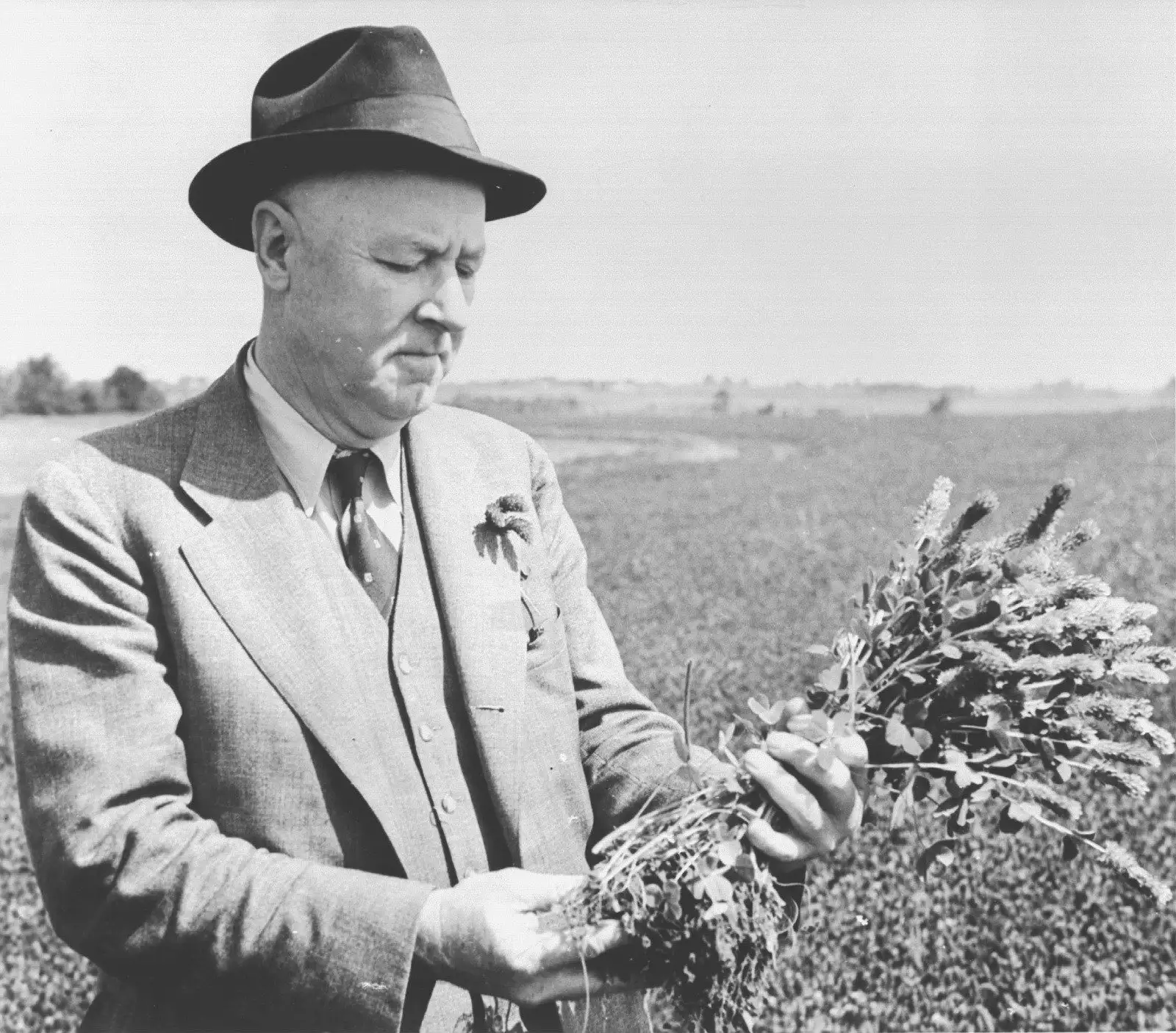
Hugh Hammond Bennett inspecting plants.
1920s
  • Hugh Hammond Bennett publishes “Soil Erosion: A National Menace”, bringing light to the soil erosion crisis.
  • His warnings are largely ignored, but he persists in raising awareness through speeches and continued writing.
The full color version of the NCPP icon.
New York Stock Exchange
1929
  • The stock market crashes, ushering in the Great Depression.
  • Farmers plow even more land to recover losses, worsening erosion problems.
  • Massive dust storms begin sweeping across the Plains, stripping away exposed topsoil.
The full color version of the NCPP icon.
A self-portrait of Franklin D. Roosevelt.
Early 1930s
  • Congress authorizes funds for investigations into soil erosion, establishing 10 erosion research stations.
  • In 1933, President Franklin D. Roosevelt launches the New Deal, which includes emergency soil erosion projects.
The full color version of the NCPP icon.
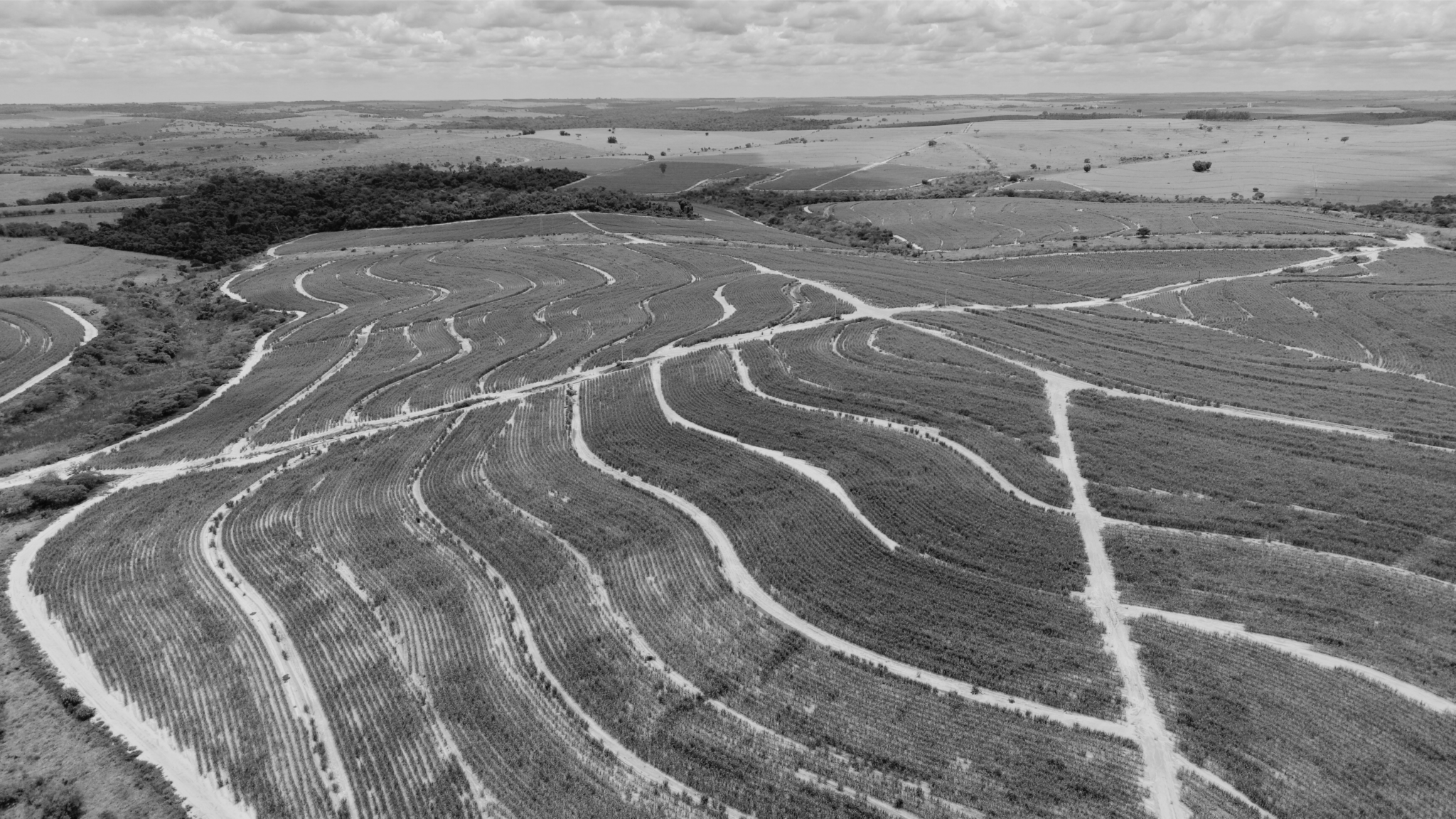
A field that is planted using contour farming.
1933 – 1934
  • Demonstration projects, including the Coon Creek Watershed Project in Wisconsin, showcase successful conservation methods like contour farming and terraces.
  • Dust storms continue to devastate farms, prompting urgent national attention.
The full color version of the NCPP icon.
A dust storm in a field. There is a lone tree next to a windmill and storage bin.
1935
  • During a Senate hearing on soil conservation, a massive dust storm darkens Washington, D.C. and dramatically proves Bennett’s point.
  • Congress unanimously passes legislation creating the Soil Conservation Service (SCS) within the USDA, and Bennett is appointed as the agency’s first Chief.
The full color version of the NCPP icon.
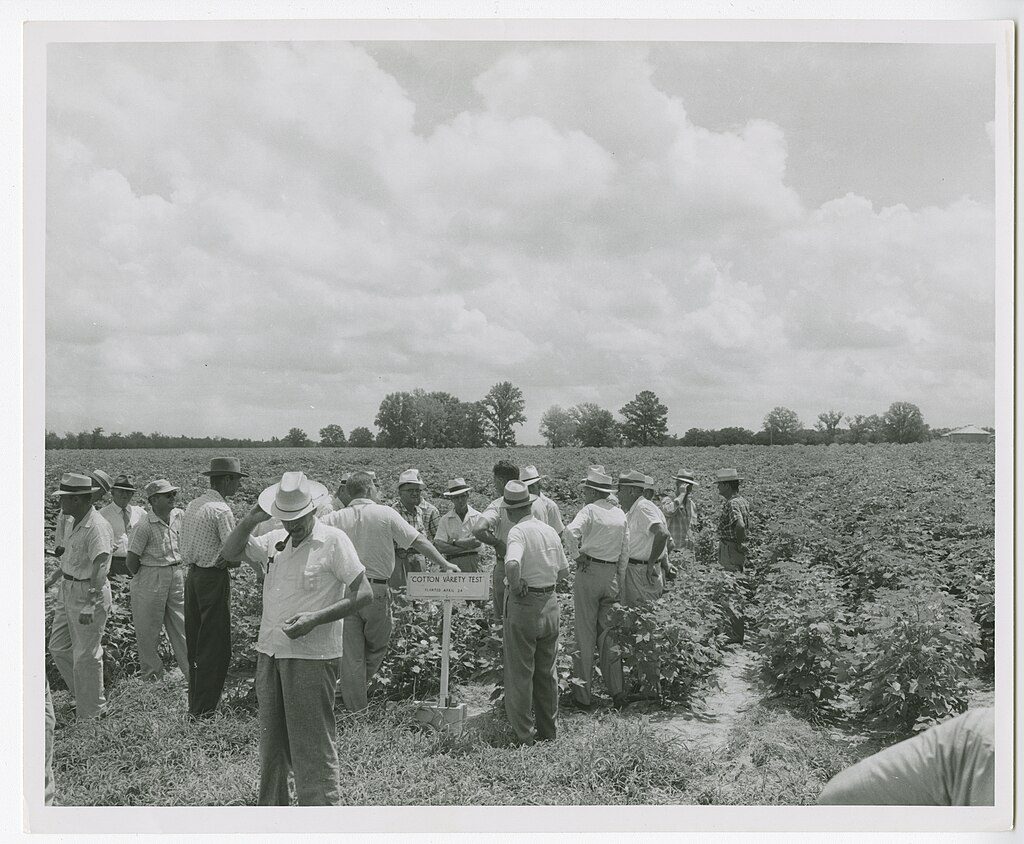
A group of people at a field on a field day.
Late 1930s
  • Roosevelt urges states to establish local soil conservation districts, allowing farmers to lead conservation efforts in their communities.
  • The first soil conservation district, Brown Creek Soil Conservation District, was established in Bennett’s hometown.
The full color version of the NCPP icon.
1940s – 1950s
  • Conservation Districts continue to be established across the country.
  • The SCS grows into a national network supporting farmers with science-based conservation practices.
  • Bennett continues leading the agency until his retirement in 1951, promoting voluntary, locally led conservation.
  • The Soil and Water Conservation Society (SWCS), a non-profit professional society, is founded by Bennett.
  • The National Association of Conservation Districts (NACD) is established as a national voice for all conservation districts. 
  • The Watershed Protection and Control Act integrates soil and water conservation efforts.
The full color version of the NCPP icon.
National Association of RC&D Councils and National Association Of State Conservation Agencies
1960s – 1970s
  • The Clean Air Act expands federal conservation efforts to improve air quality. 
  • The Federal Water Pollution Act increases attention to non-point source water quality.
  • Resource Conservation & Development Councils (RC&D’s) are created.
  • The National Association of State Conservation Agencies (NASCA) is established to unite and strengthen state conservation agencies across the nation.
The full color version of the NCPP icon.
USDA Natural Resources Conservation Service U.S. Department of Agriculture & National Conservation District Employees Association
1980s – 1990s
  • The Soil Conservation Service is renamed the Natural Resources Conservation Service (NRCS) to reflect its broader mission.
  • The farm crisis led to innovative conservation policies, as part of the Resource Conservation Act. 
  • The National Conservation District Employees Association (NCDEA) forms to connect district employees nationwide and support their professional growth.
The full color version of the NCPP icon.
2014

The National Conservation Planning Partnership (NCPP) is created to strengthen collaboration among conservation partners, revitalize conservation planning, and enhance delivery at the field level through unified leadership and action teams.
The full color version of the NCPP icon.
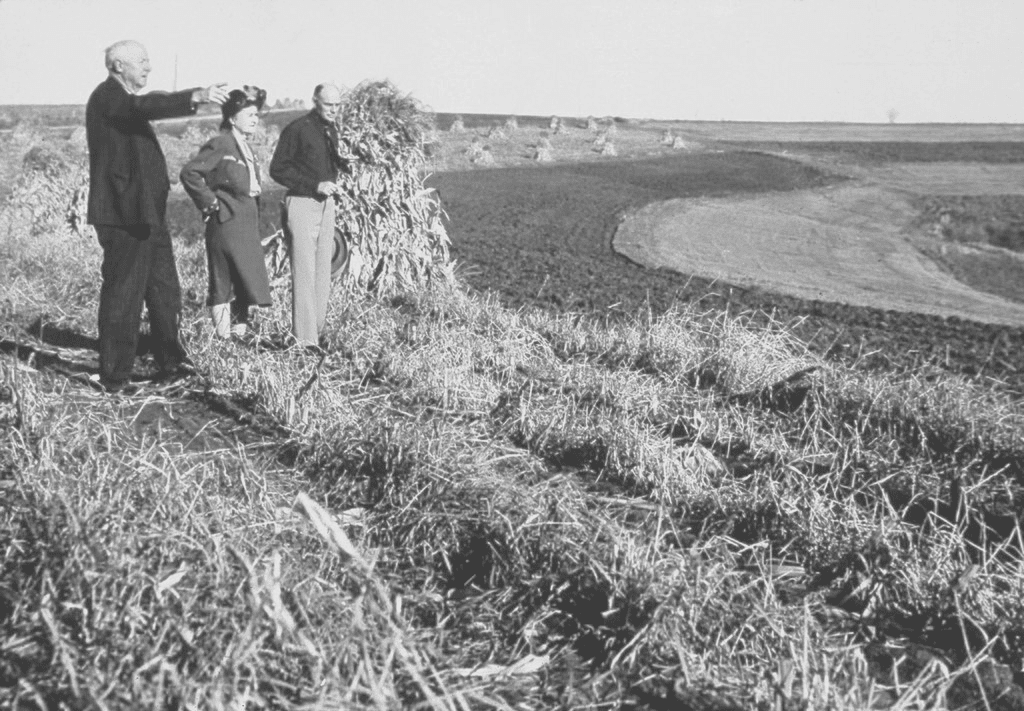
Conservationists inspect a field in Wisconsin.
Today

The NCPP partners continue the great work started by Bennett, still implementing many of his conservation strategies today.

The full color version of the NCPP icon.
“Out of the long list of nature's gifts to man, none is perhaps so utterly essential to human life as soil.”

 – Hugh Hammond Bennett

A self-portrait of Hugh Hammond Bennett
“Out of the long list of nature's gifts to man, none is perhaps so utterly essential to human life as soil.”

 – Hugh Hammond Bennett