Organization of Conservation Districts
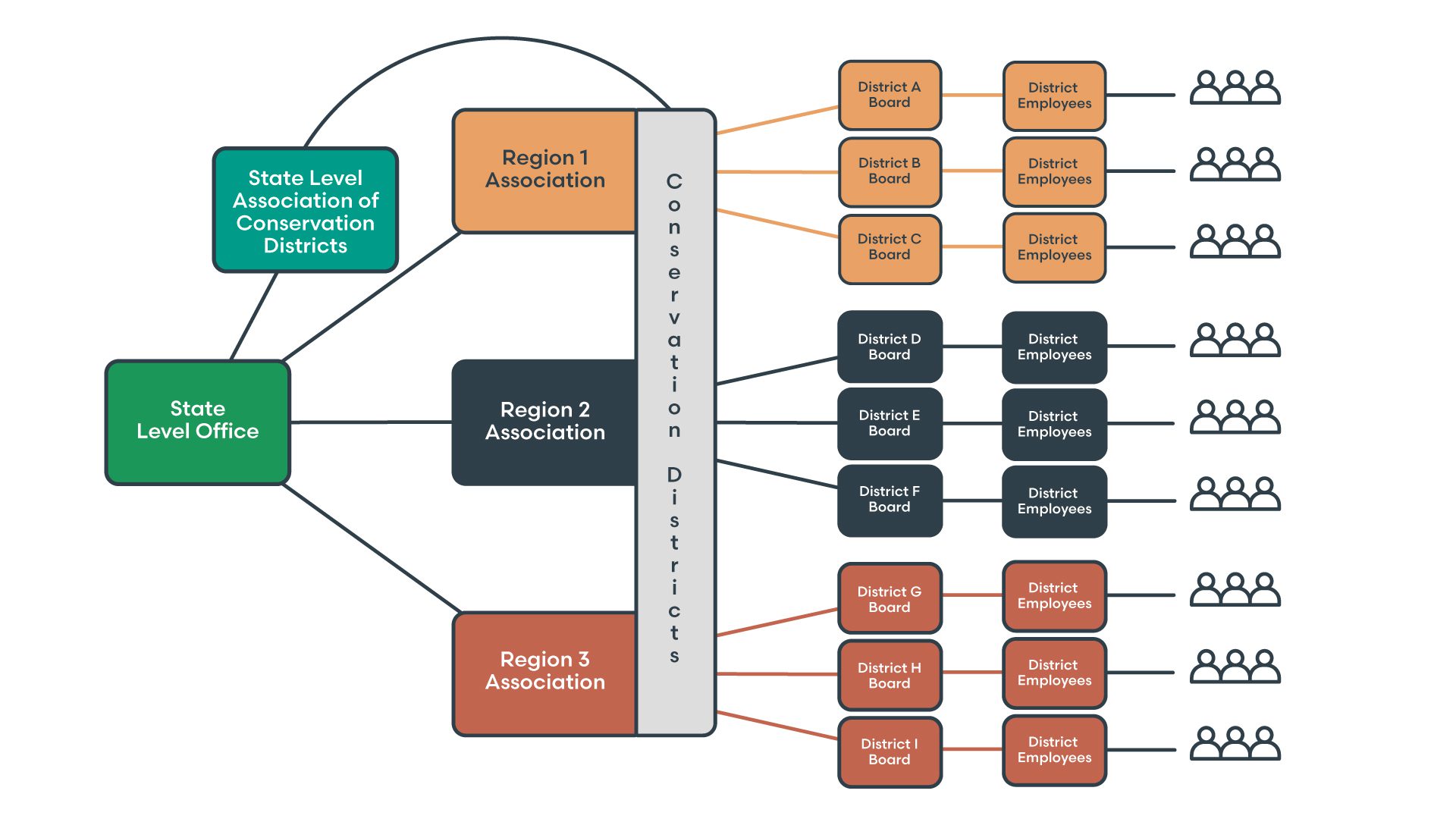
While each state is unique, there are commonalities in the overall organization of conservation districts.
Click into each icon in the chart to learn more. Click again to close.
State Level Office
In nearly every state, a designated agency, department, committee, or commission oversees and coordinates the activities of local conservation districts. These state-level offices are typically led by elected or appointed officials who provide direction, policy and accountability. It is also common for other state agencies, such as departments of agriculture, health, forestry, or extension services, to serve in an advisory role, offering technical expertise and guidance. In many states, regional representatives or advisory members also participate to ensure voices are present from each part of the state.
State Level Association of Conservation Districts
In nearly every state, conservation districts have created a non-profit state/territory level organization to represent districts on state level issues. These state associations are also members of the National Association of Conservation Districts (NACD).
State Regional Associations
Many states organize their conservation districts into regional subgroups. Each subgroup includes several districts that collaborate on shared needs and priorities. These regional structures allow districts to pool resources, coordinate training, share equipment, and hold regular regional meetings. They also provide a unified way for districts to identify regional conservation priorities and submit collective policy recommendations to their state level office.
Conservation District Boards
The next level of structural organization is the conservation district board. States are divided into local conservation districts, often aligned with county boundaries. The local conservation district units are governed by a board of supervisors or directors. The board members are typically:
- Residents of the district
- Elected or appointed under state law
- Local landowners or community members
These boards provide leadership and oversight for district operations and staff, ensuring that conservation activities reflect local priorities and needs while following guidance from the state-level office. Policy and planning decisions are made by the board. District employees also report to the board.
Conservation District Employees
District employees handle the day-to-day work that keeps a conservation district running. Their close connection to landowners puts them at the center of conservation efforts in their communities. Although responsibilities differ across states, district staff typically support the following:
- Supporting landowners and producers
- Implementing conservation programs
- Conservation outreach and education
- Collaborating with conservation partners
- Data collection and field support
- Administrative and board support
Landowners/Producers
All the work of the State Office, Conservation District Board and District Employees ultimately supports the most important players in conservation: the landowners and producers. These residents of the local community work closely with conservation district staff to identify natural resource concerns, explore conservation practices, understand available cost-share opportunities, and access technical guidance from partner agencies. Their decisions and commitment drive conservation work forward on the ground.
State Level Office
In nearly every state, a designated agency, department, committee, or commission oversees and coordinates the activities of local conservation districts. These state-level offices are typically led by elected or appointed officials who provide direction, policy and accountability. It is also common for other state agencies, such as departments of agriculture, health, forestry, or extension services, to serve in an advisory role, offering technical expertise and guidance. In many states, regional representatives or advisory members also participate to ensure voices are present from each part of the state.
State Level Association of Conservation Districts
In nearly every state, conservation districts have created a non-profit state/territory level organization to represent districts on state level issues. These state associations are also members of the National Association of Conservation Districts (NACD).
State Regional Associations
Many states organize their conservation districts into regional subgroups. Each subgroup includes several districts that collaborate on shared needs and priorities. These regional structures allow districts to pool resources, coordinate training, share equipment, and hold regular regional meetings. They also provide a unified way for districts to identify regional conservation priorities and submit collective policy recommendations to their state level office.
Conservation District Boards
The next level of structural organization is the conservation district board. States are divided into local conservation districts, often aligned with county boundaries. The local conservation district units are governed by a board of supervisors or directors. The board members are typically:
- Residents of the district
- Elected or appointed under state law
- Local landowners or community members
These boards provide leadership and oversight for district operations and staff, ensuring that conservation activities reflect local priorities and needs while following guidance from the state-level office. Policy and planning decisions are made by the board. District employees also report to the board.
Conservation District Employees
District employees handle the day-to-day work that keeps a conservation district running. Their close connection to landowners puts them at the center of conservation efforts in their communities. Although responsibilities differ across states, district staff typically support the following:
- Supporting landowners and producers
- Implementing conservation programs
- Conservation outreach and education
- Collaborating with conservation partners
- Data collection and field support
- Administrative and board support
Landowners/Producers
All the work of the State Office, Conservation District Board and District Employees ultimately supports the most important players in conservation: the landowners and producers. These residents of the local community work closely with conservation district staff to identify natural resource concerns, explore conservation practices, understand available cost-share opportunities, and access technical guidance from partner agencies. Their decisions and commitment drive conservation work forward on the ground.