While conservation districts have been at the heart of local conservation work for almost a century, their work is not accomplished in isolation. Now that you understand how conservation districts operate, the next step is to explore the partners that help them accomplish their work.
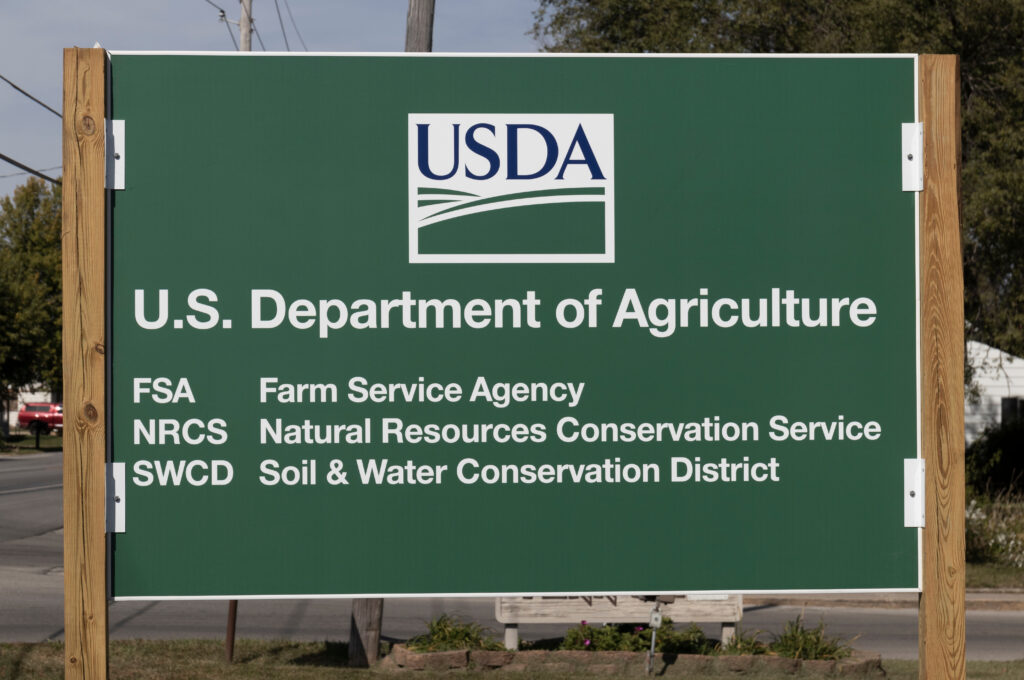
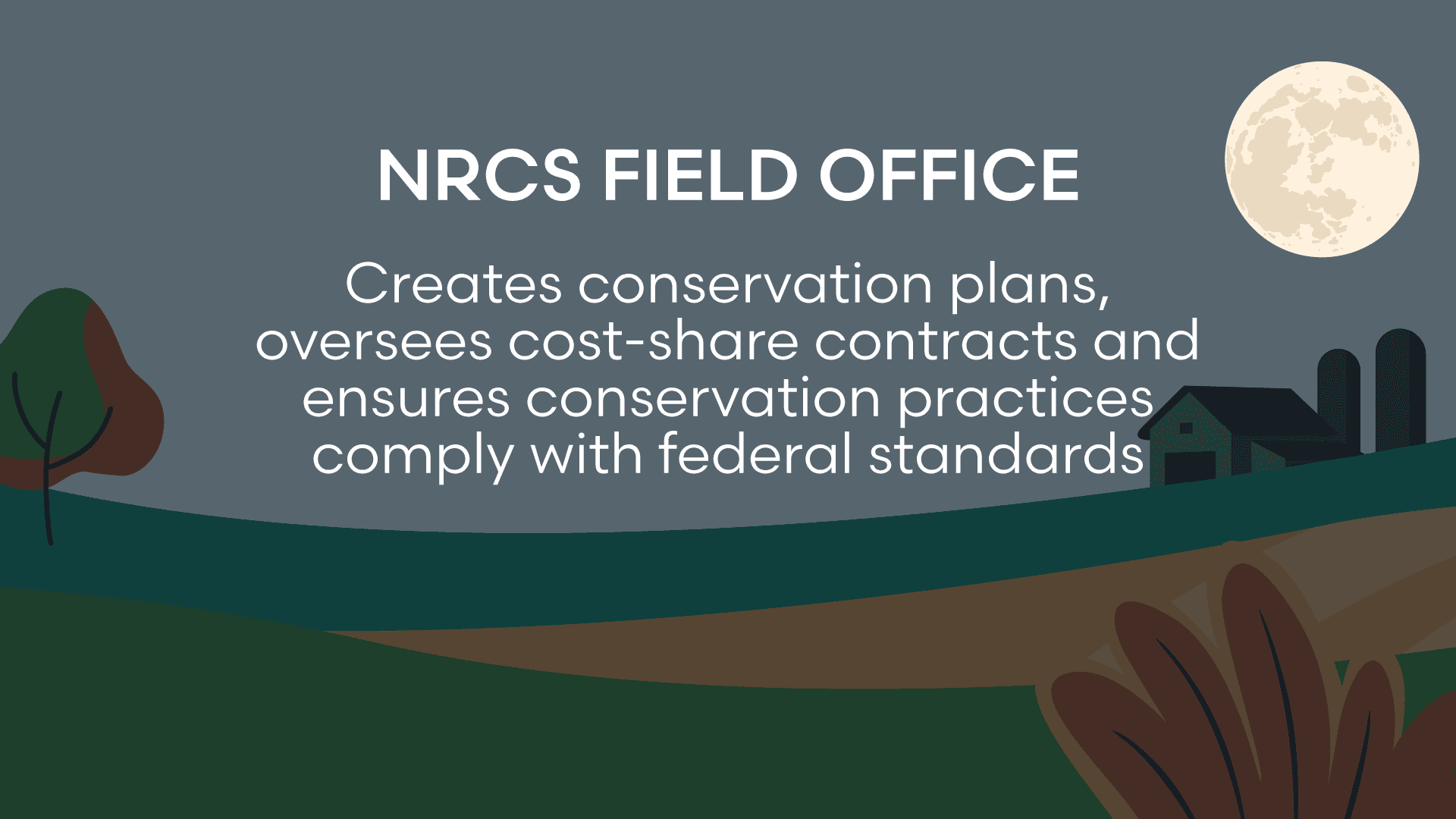
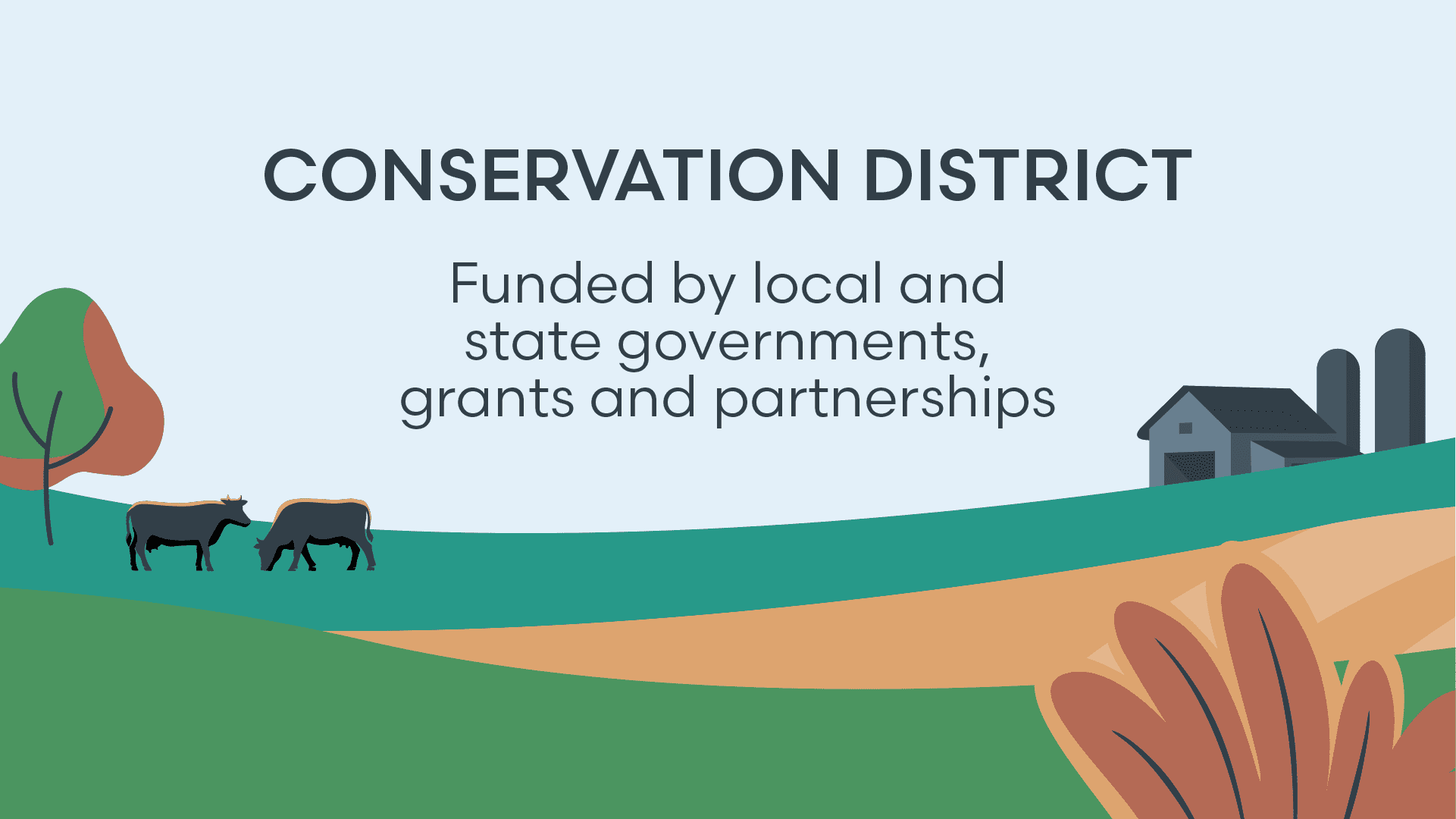
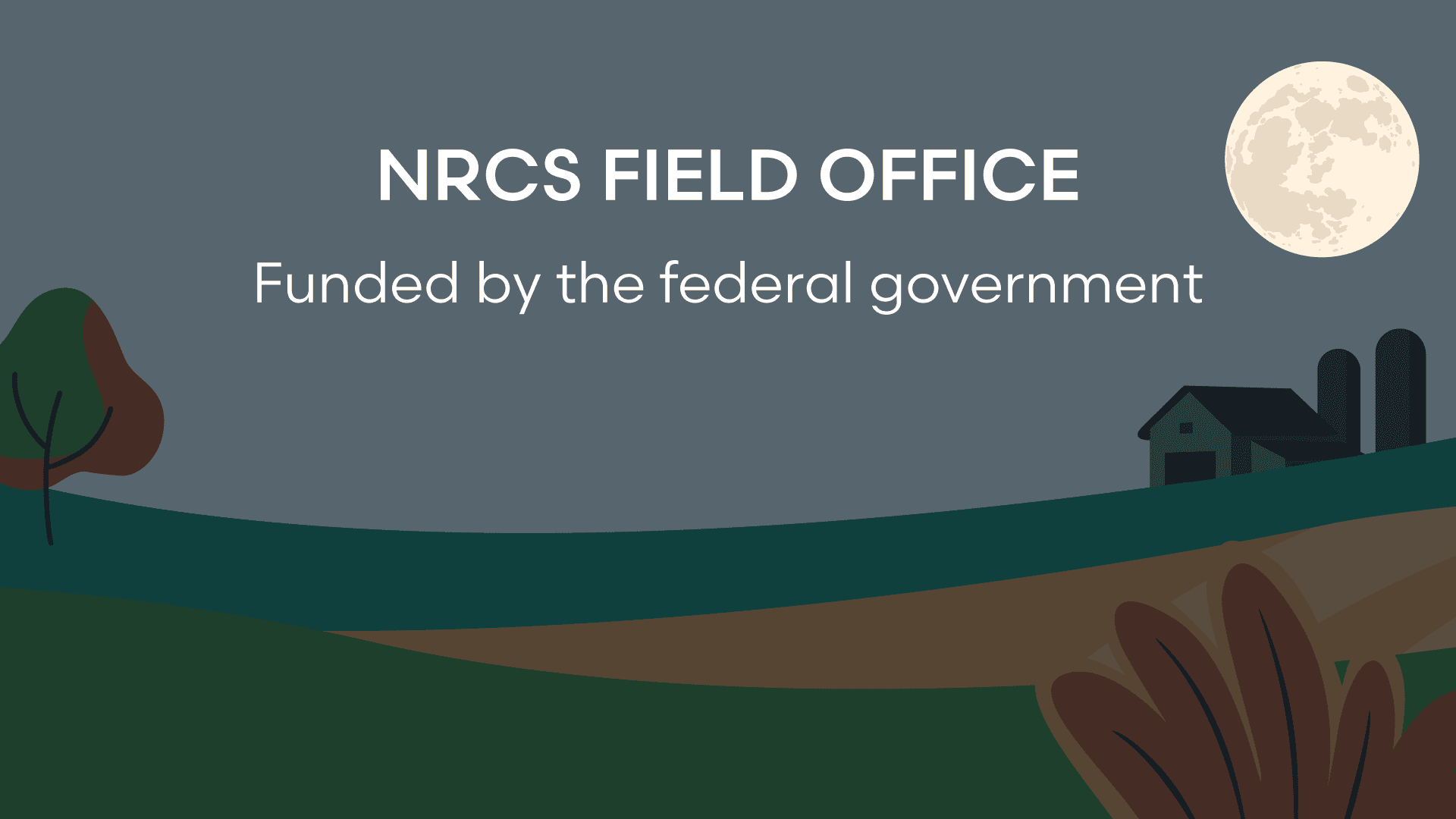
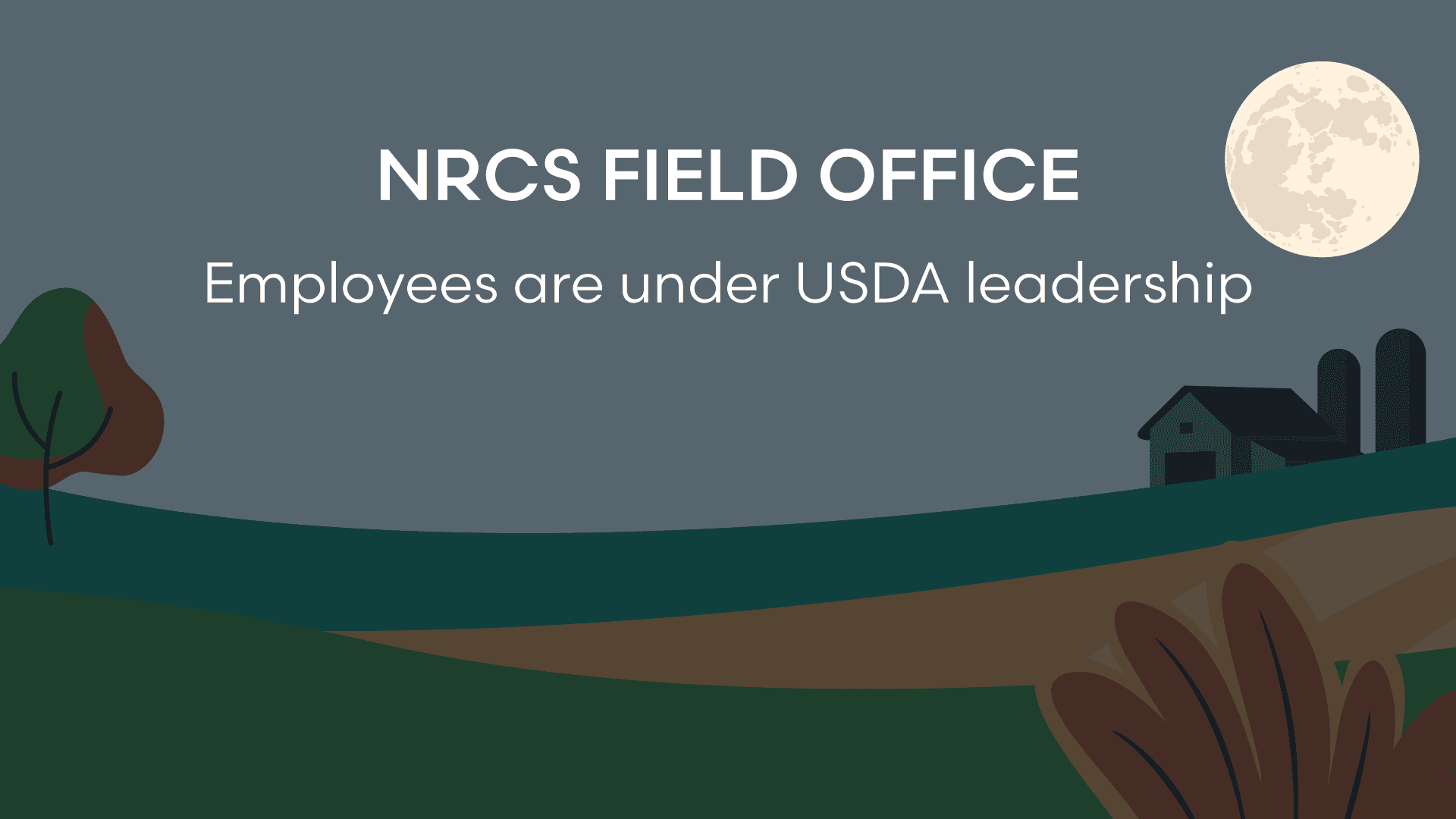
As you learned earlier, NRCS is the division of the USDA responsible for the conservation of natural resources. Approximately 60% of conservation district employees share office space with a NRCS Service Center. The purposeful co-location is designed to maximize efficiency for landowners, although it can in some cases also cause confusion.
Use the sliders below to explore the differences between a conservation district and NRCS Service Center.
Focus Area
Primary Role
Funding
Employee Supervision
Employee Status
Oversight
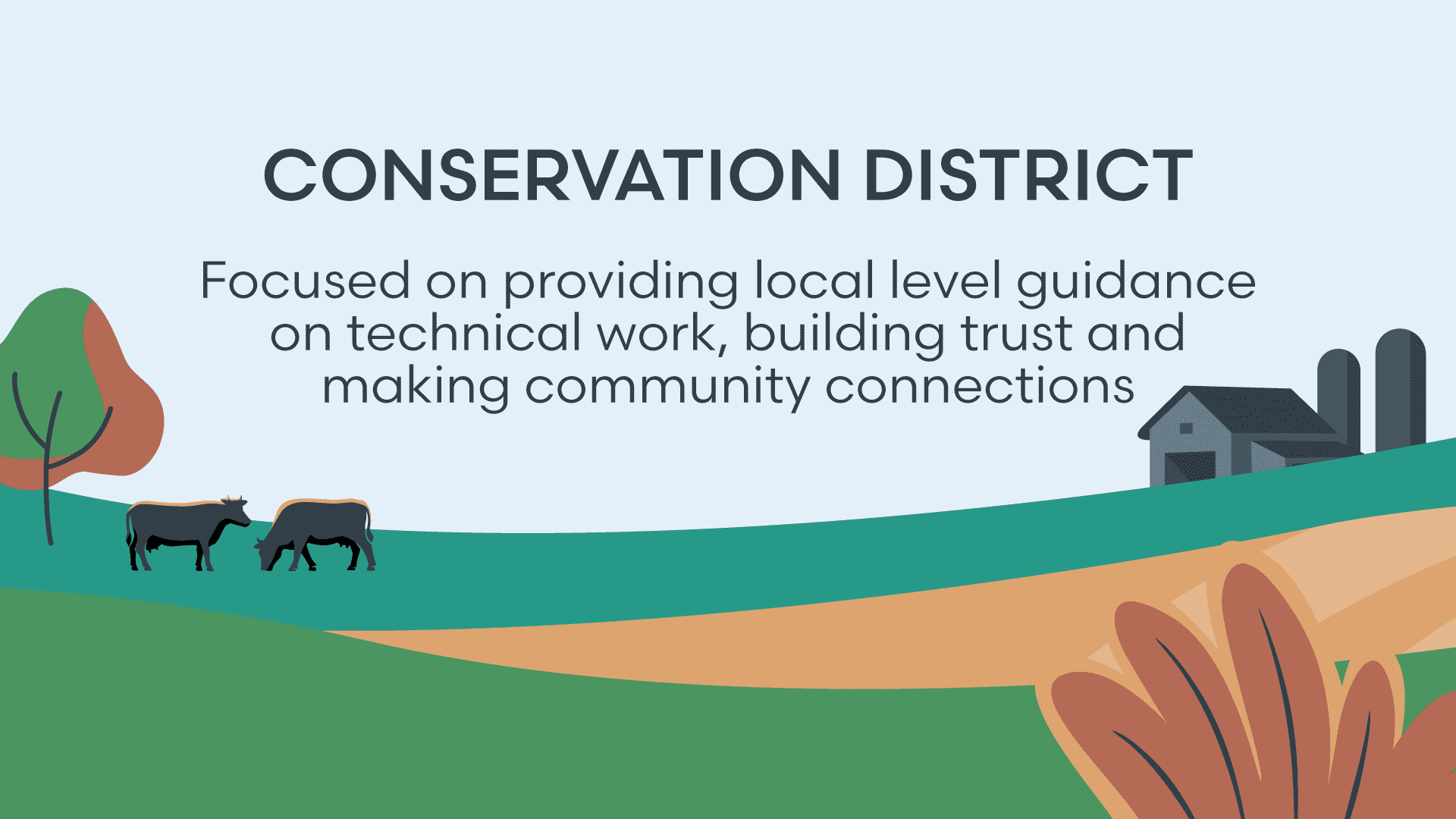
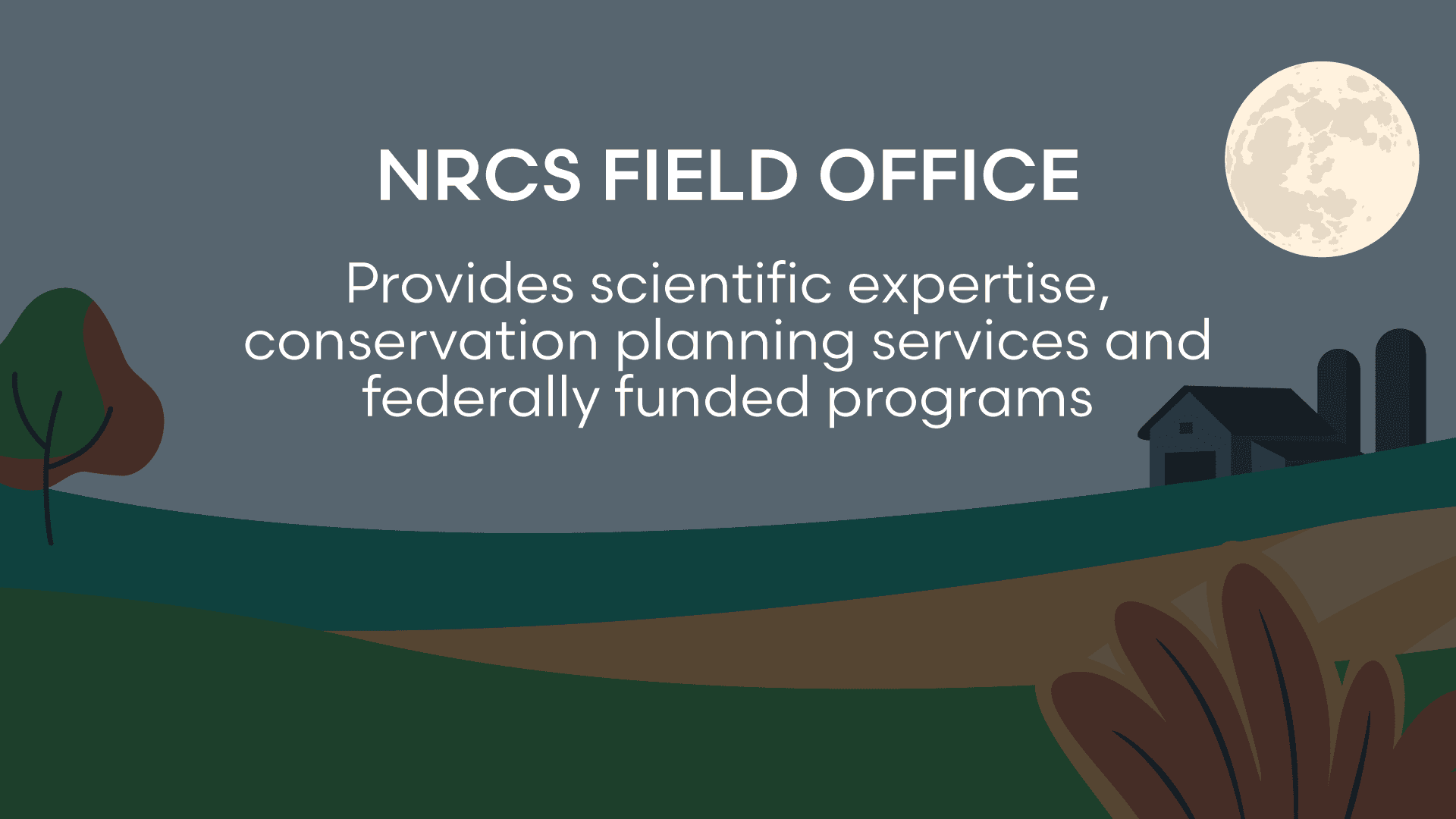
When a landowner visits a co-located office to develop a conservation plan, they’ll frequently work with both district staff and NRCS. This co-location model brings together the strengths of both partners: NRCS staff contribute scientific expertise and access to federal programs, while conservation district staff offer deep local knowledge, relationships, and community trust.
Farm Service Agency (FSA)
FSA staff are often co-located with conservation districts and NRCS service centers, and like NRCS, FSA is a division of the USDA. While both agencies administer conservation programs, their roles differ. NRCS focuses on conservation planning and implementing practices on private working lands, while FSA manages programs centered on land retirement, disaster recovery, and environmentally sensitive areas. Many FSA programs, such as the Conservation Reserve Program (CRP), provide rental payments to landowners who take land out of production and establish conservation cover like native grasses, trees, or wetland habitat. FSA typically handles program enrollment, contracts, and payments, with NRCS providing technical eligibility and standards.